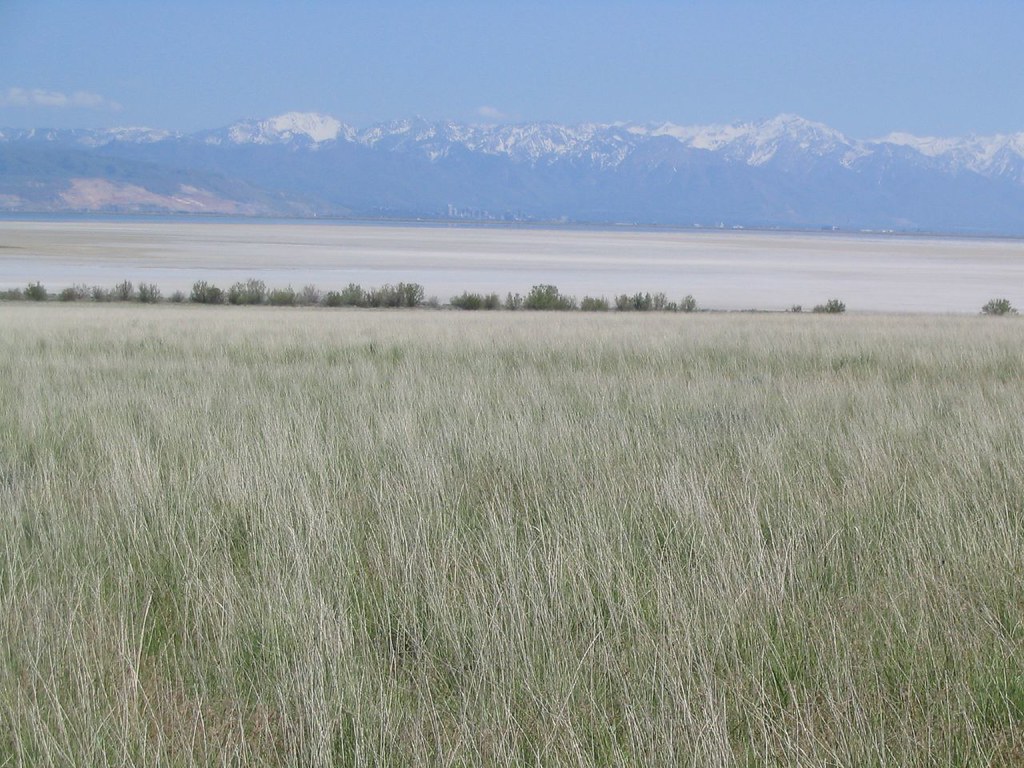
There is a moment, somewhere on the causeway that stretches across the shimmering flats of the Great Salt Lake, when you realize you have left the ordinary world behind. The water spreads out in every direction, turning colors that seem borrowed from a painter’s more ambitious palette — rose gold at dusk, silver-white at noon, deep violet when a storm rolls in from the Wasatch. And then Antelope Island rises ahead of you, ancient and unhurried, and you feel something in your chest loosen just a little.
Antelope Island State Park sits roughly 28 miles northwest of downtown Salt Lake City, and yet it feels like a different continent. At roughly 28,000 acres, it is the largest island in the Great Salt Lake and one of the most accessible pieces of genuine wilderness in the entire intermountain West. You drive across a seven-mile causeway from the town of Syracuse, pay a small vehicle entrance fee, and then you are simply there — in a landscape that has been doing its own thing since long before anyone thought to name it.
The park is perhaps best known for its free-roaming bison herd, one of the oldest publicly owned herds in the country. On any given morning you might round a bend on the Lakeside Trail and find yourself face-to-face with a bull that weighs more than a compact car and has absolutely no interest in your schedule. That moment of mutual appraisal — you and a creature that walked this same ground thousands of years ago — is the kind of thing you carry home and think about for weeks. The herd numbers around 700 animals, and the annual bison roundup each October draws crowds who come to watch cowboys and park staff manage the herd on horseback. It is spectacle and stewardship all at once.
Beyond the bison, the island offers over 30 miles of hiking and biking trails ranging from the gentle Fielding Garr Ranch loop to the steep, rewarding climb up Frary Peak, the island’s highest point at 6,596 feet. From the summit, the view takes in the full sweep of the Great Salt Lake, the Wasatch peaks to the east, and on a clear day, the Nevada ranges to the west. It is the kind of panorama that makes you want to sit down and stay awhile.
Birdwatchers have long known that Antelope Island is something extraordinary. The lake’s shoreline hosts millions of migratory birds each year — avocets, phalaropes, pelicans, and curlews among them — turning the flats into one of the premier birding destinations in North America. Bring binoculars and plan to linger.
There is also the Fielding Garr Ranch, a well-preserved homestead dating to 1848, where rangers and volunteers bring frontier-era ranching history to life. It is a quieter corner of the park, easy to miss if you are focused on the trails, but well worth the detour for anyone who likes their landscapes layered with human story.
The best times to visit are spring and fall, when temperatures are mild and the light on the lake is genuinely spectacular. Summer brings heat and the legendary brine flies — harmless but numerous, swarming along the shoreline in dense clouds that can surprise a first-time visitor. Pack bug spray, embrace the weirdness, and know that the flies are actually a critical part of the ecosystem that sustains all those birds.
Camping is available at Bridger Bay Campground, with sites that put you close enough to the water to fall asleep to the sound of the lake and wake up to a horizon so wide it resets something in your nervous system. Even a day trip, though, is worth every mile of the drive. Antelope Island is the kind of place that reminds you why the West still matters — raw, generous, and completely itself.