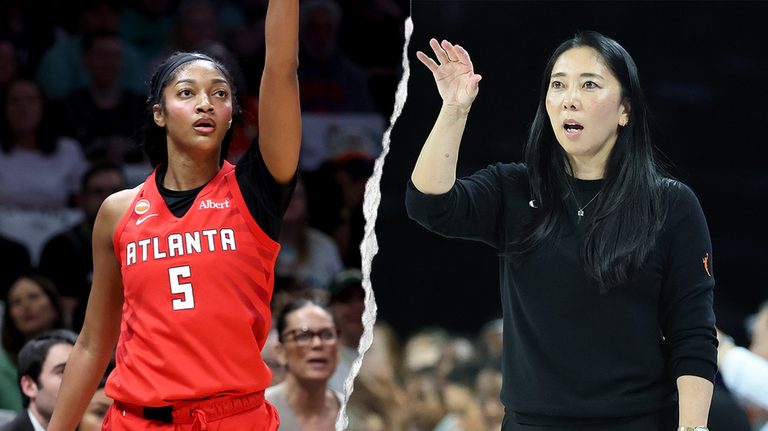
The WNBA Finals tip off on Oct. 17 with the Atlanta Dream, led by Angel Reese, taking on the Golden State Valkyries in a best‑of‑seven showdown. Both teams bring distinct cultural identities that add intrigue to the championship battle.
Reese’s star power on display
Reese enters the Finals with the league’s largest social‑media following – about 5.3 million Instagram followers as of Oct. 10, roughly one million more than Caitlin Clark. Her marketability extends beyond the court: she has a signature Reebok shoe and was the first female athlete featured in a national McDonald’s meal collaboration in 2025. Those partnerships have introduced her name to consumers who may not regularly watch women’s basketball.
The series will be a litmus test for whether Reese’s off‑court popularity can translate into higher television ratings now that the Fever and Clark are out of contention.
Viewership benchmarks
Last season’s Las Vegas–Phoenix championship averaged 1.5 million viewers across ABC and ESPN, the second‑most‑watched Finals on ESPN networks behind 2024. Earlier this year, Indiana’s first‑round loss to Las Vegas drew 2.25 million viewers on USA Network and CNBC, while Atlanta’s semifinal opener against New York attracted about 1.2 million on ABC. Those figures provide context but are not direct comparisons because the games aired on different networks and time slots.
This year’s Finals will be broadcast across NBC, USA Network, and Peacock, adding another variable to audience measurement.
Team histories and cultural backdrop
Atlanta’s franchise has a history of political activism. In 2020, co‑owner then‑Senator Kelly Loeffler, a Republican, opposed the league’s Black Lives Matter initiatives and urged the replacement of planned warm‑up apparel with American flags. Players responded by wearing “Vote Warnock” shirts in support of Democrat Raphael Warnock, who later defeated Loeffler in the 2021 runoff.
In 2021 the Dream was sold to a new ownership group that includes former player Renee Montgomery, who remains a co‑owner and vice president and is known for advocating social‑justice causes in women’s sports.
Golden State, an expansion team that began play in 2025, has embraced LGBTQ outreach. Its second annual Pride Game featured drag performances, Pride merchandise, and a halftime lineup with Sasha Colby. The franchise has received awards from Equality California and the National Center for LGBTQ Rights, and its players have publicly supported transgender athletes.
League leadership transition
The Finals also mark the final championship under Commissioner Cathy Engelbert, who announced her retirement effective at the end of 2026. Her tenure concluded with a new collective bargaining agreement that provides substantial raises for players and a seven‑year salary structure through 2032.
Looking ahead, the league plans to launch a centralized replay center in 2027 and continue expansion with Cleveland (2028), Detroit (2029) and Philadelphia (2030), aiming to grow both market reach and sustained fan support.
What the series could mean for the WNBA
While a single series cannot define the league’s long‑term audience ceiling, Reese’s championship debut offers a clear indicator of how much her personal brand can boost viewership. The matchup also provides a snapshot of how the league’s cultural narratives—ranging from political activism to LGBTQ inclusion—play out on the sport’s biggest stage.
Original reporting: Fox News (HLL/CB) — read the source article.