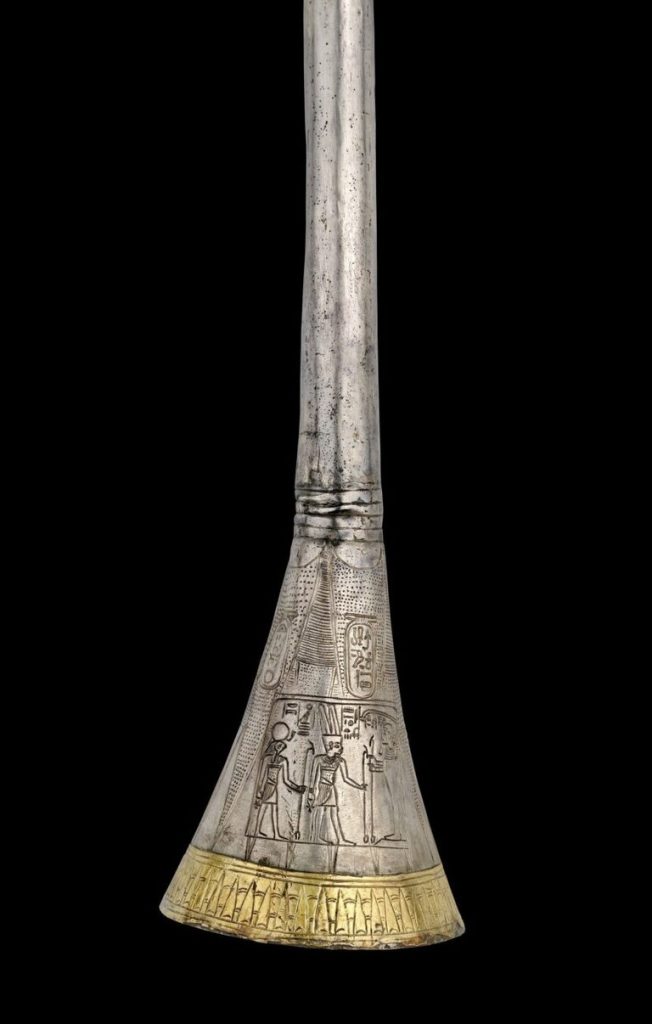
The Egyptian trumpets of pharaoh Tutankhamun were played after 3,000 years in a 1939 BBC radio broadcast. The broadcast featured the blare of a trumpet, which was one of two small, ornate trumpets found among Tutankhamun’s treasures. The trumpets were made by skilled metal workers and feature intricate imagery, including floral motifs and Egyptian gods.
History of the Trumpets
The trumpets were discovered in the 1920s and were believed to have been played in procession as the king came through. They were also used in military, religious, and ceremonial events. The trumpets required skilled metal workers capable of making both a beautiful and working musical instrument.
Today, the trumpets have a new home in the Grand Egyptian Museum, which opened in November. The museum features state-of-the-art facilities, including climate-controlled displays to preserve the trumpets and their original wooden cores. The trumpets are now almost certainly never to be played again due to their fragility.
Preservation Efforts
The Grand Egyptian Museum has taken steps to preserve the trumpets, including housing them in climate-controlled displays. The museum also features a complex system for each display, including security measures to protect the artifacts. The preservation of the trumpets is crucial, as they are a significant part of ancient Egyptian history and culture.
Original reporting: KTVZ (Central Oregon) — read the source article.