When a 17‑year‑old student from Prince George County, Virginia, vanished from her college parking lot on Sept. 23, Horry County residents could not have imagined the role their own license‑plate reader (ALPR) network would soon play. The same automated cameras that monitor traffic on the Grand Strand helped investigators locate the suspect, Alonzo N. Claiborne, and ultimately free the teen during a traffic stop in Myrtle Beach.
From a Virginia campus to the Grand Strand
Maj. William Knott of the Dinwiddie County Sheriff’s Office reported that the girl, who is enrolled at both Prince George County High School and Richard Bland College, failed to return home after class. Her car was found abandoned on campus with personal belongings, including her phone, raising immediate concern.
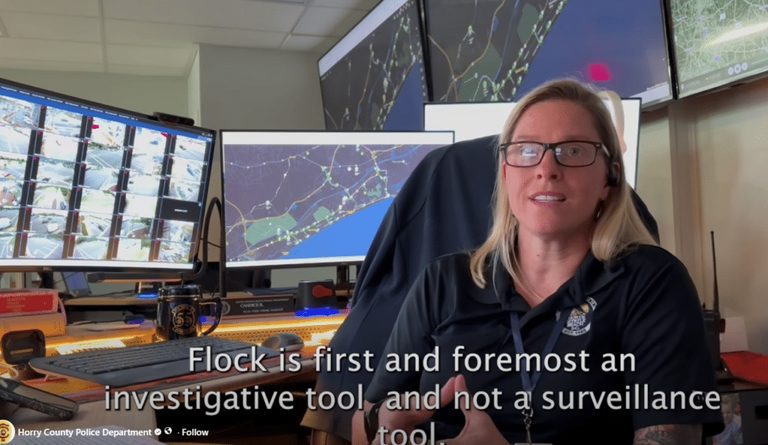
Police quickly identified Claiborne, a 19‑year‑old former boyfriend with no prior criminal record, as a suspect. Using Horry County’s Flock ALPR system, officers were able to follow his vehicle as it crossed state lines. The cameras captured his license plate in South Carolina, allowing deputies to continue the pursuit into North Carolina.
Traffic stop leads to rescue
When Myrtle Beach police attempted to pull the vehicle over, Claiborne pushed the teen out of the car and fled. The traffic stop therefore freed her from captivity. After a brief chase, the suspect stole a second vehicle, evaded officers again, and eventually fled on foot. He was later apprehended in Pender County, North Carolina, after additional Flock cameras alerted local deputies.
Following his capture, Claiborne jumped into the Intracoastal Waterway, where a boat rescued him. The coordinated use of ALPR technology across three states illustrates how the system can assist law‑enforcement in real‑time, multi‑jurisdictional investigations.
Local debate over privacy and oversight
While the cameras proved instrumental in this case, Horry County is currently debating whether to continue their use. Conway resident Chuck Hooks launched a Change.org petition calling for a countywide ban, arguing that privacy should come first and warning of potential abuse by a single officer.
Hooks’ concerns are not without precedent. In June, two Greer police officers were terminated after an audit revealed they used ALPR data to monitor individuals, including a former romantic partner. The ACLU of South Carolina has also warned that unchecked tracking could expose citizens’ places of worship, political gatherings, and other protected activities.
Supporters, including Horry County Council Chairman Johnny Gardner, note that the technology has helped locate missing children and vulnerable adults. Recent adjustments by Flock Safety—reducing data retention from 30 days to seven, requiring case numbers for searches, and mandating regular audits—aim to address privacy worries while preserving public‑safety benefits.
What residents should know
Three key takeaways emerge from this incident:
- Public safety impact: The ALPR system directly contributed to rescuing a kidnapped teen and locating other vulnerable individuals.
- Privacy safeguards: Ongoing policy changes seek to limit data retention and increase oversight, responding to legitimate community concerns.
- Local oversight: The Horry County council will review the petition and consider additional transparency measures before any decision on a ban is made.
As the council committee evaluates the evidence, residents are encouraged to stay informed about both the life‑saving capabilities of the technology and the safeguards being put in place to protect constitutional privacy rights.
Original reporting: MyrtleBeachSC News — read the source article.