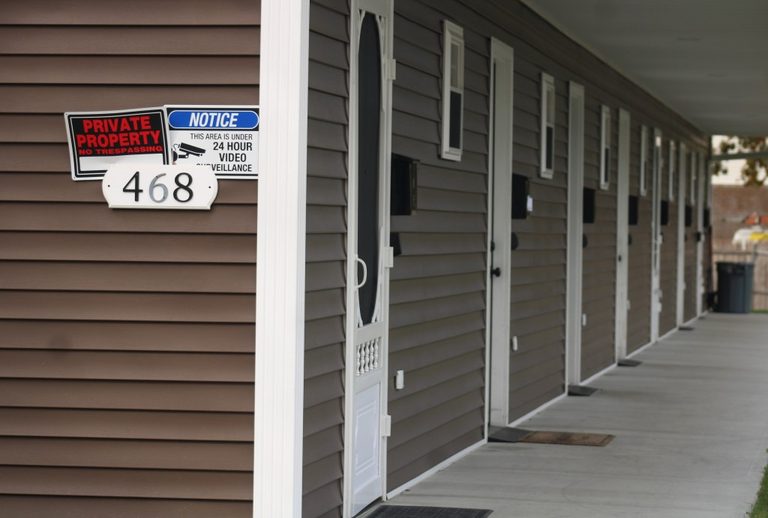
New Haven’s Board of Alders is taking steps to correct a tax abatement that was approved on Monday for a seven‑unit senior and disabled housing complex at 468 Middletown Avenue. The original vote, passed by voice vote, granted a 17‑year abatement based on information that later proved to be inaccurate.
Alleged Errors Prompt Amendment Motion
Majority Leader and Westville/Amity Alderman Richard Furlow announced Wednesday that he will introduce a motion to amend the previously adopted measure. Furlow said the amendment is necessary after discovering that the property owner, Michael Puccino of Puccino Properties LLC, may not be eligible for the full 17‑year term.
“To make a long story short, there’s gonna be a ‘motion to amend the matter previously adopted,’” Furlow told reporters.
Details of the Abatement and the Discrepancy
The legislation, submitted by Puccino, requested a 17‑year tax abatement for the property. The Tax Abatement Committee had earlier recommended taxing the building at $650 per unit, a figure that would be significantly lower than the $2,516 per unit that would result from applying the city’s current mill rate of 39.962 to the gross assessed value.
City spokesperson Lenny Speiller confirmed that Mayor Justin Elicker has not yet signed the Monday legislation, leaving the amendment process open.
Office of Legislative Services staff indicated that the abatement will be drafted with a $650 per unit rate, increasing by 3 % annually. However, the staff also noted that a 17‑year term is not permissible because the building is already constructed; the correct term should be 15 years, for which the developer is eligible. The staff described the 17‑year figure as a “scrivener’s error.”
Miscommunication Over LISHTA Review
During the Monday meeting, Alderman Furlow claimed the abatement had been approved by LISHTA (Low Income Supportive Housing Tax Abatement), an ad‑hoc committee that reviews such requests. He later clarified at a Democratic Party caucus that the claim was mistaken.
Furlow attributed the confusion to a good‑faith mistake by newer alders and said the item will be sent to LISHTA for proper review and amendment after a recommendation is received.
Developer’s Perspective
Puccino told the Tax Abatement Committee in October that all tenants are elderly or disabled and receive subsidized rent through the state Rental Assistance Program (RAP). Under RAP, tenants pay 30 % of their household income toward rent, with the program covering the remainder.
Puccino said the abatement would help preserve his ability to support the tenants, noting that he covers utilities except electricity and remains “always there to watch, to check out on them.” He expressed hope that the tax break would remain unchanged.
According to documents submitted by Puccino, the property received $18,312 in rent from tenants and $129,589 from J. D’Amelia, the subcontractor that administers RAP vouchers, during 2025. This averages roughly $1,760.73 per month per one‑bedroom unit.
Current Tax Situation
The building already benefits from a tax exemption. For the current year, the city has billed Puccino $5,714.98 in taxes, with half due on August 3, 2026, and the remainder due on February 1, 2027. Without the exemption, the property would owe approximately $17,614.
Opposition from Some Alders
At least three of the 30 alders voted against the original item: Downtown/East Rock Alderman Christine Kim, East Rock Alderman Anna Festa, and West Hills/West Rock Alderman Honda Smith.
Kim said she opposed the 17‑year term because it seemed excessively long. Smith argued, “I’m not saying yes to another tax break. It’s not fair. We can’t tax the poor and give to the rich. You’re robbing the hood.” Festa, the sole alder to speak on the floor against the measure, noted her general opposition to tax abatements due to a lack of transparency in the calculations.
Next Steps
The Board of Alders will revisit the abatement after the amendment is drafted and LISHTA provides its recommendation. The process underscores the city’s commitment to ensuring that tax incentives for supportive housing are both lawful and fiscally responsible.
Original reporting: New Haven Independent — read the source article.