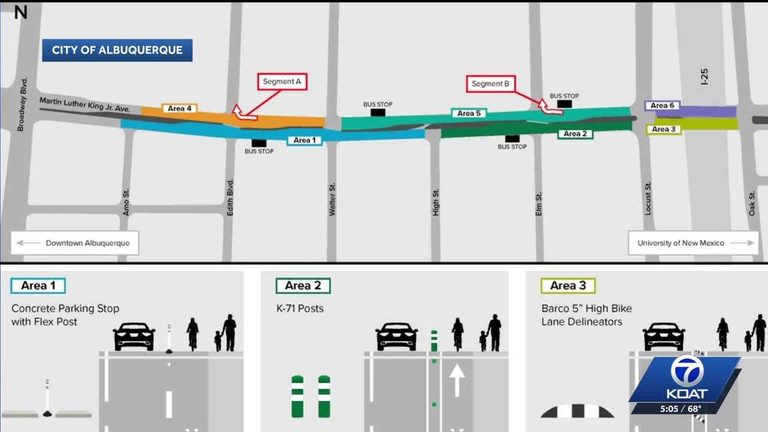
Albuquerque officials have begun a two‑week pilot project to evaluate six distinct separated bike lane designs on Martin Luther King Jr. Avenue. The work, which started this week, converts the existing buffered lanes between Arno Street and Oak Street into fully separated lanes using a variety of barrier types.
Why the pilot matters
The corridor is a key component of the city’s Vision Zero High Fatal and Injury Network, a program that targets locations with recurring fatal or serious‑injury crashes. By testing multiple delineators—such as concrete curbs, planters, flexible bollards, and painted buffers—the city hopes to identify the most effective solution for protecting cyclists while maintaining traffic flow.
Project timeline and scope
Installation is expected to take about two weeks. Once the barriers are in place, the city will launch a public survey to collect input from cyclists, motorists, and local residents. The survey will ask respondents to rate each design’s perceived safety, comfort, and visual appeal, as well as any suggestions for improvement.
Building on prior work
This pilot builds on an initial installation completed in late 2025, when a short segment of MLK Avenue received a temporary separated lane. The earlier effort demonstrated that dedicated space for cyclists can reduce conflicts with turning vehicles and improve overall traffic safety.
City officials’ perspective
Mayor Tim Keller and Transportation Director Maria Gonzales emphasized that community feedback will directly shape future bike‑lane projects across Albuquerque. “Our goal is to create a network of safe, attractive routes that encourage more residents to choose cycling for everyday trips,” Keller said. Gonzales added that the data gathered from this pilot will inform the design standards for upcoming projects on other major corridors.
What residents can expect
During the installation period, motorists may notice temporary lane closures and signage directing traffic around the work zones. The city has coordinated with the Albuquerque Police Department to ensure smooth traffic flow and to address any safety concerns promptly.
Looking ahead
After the survey period concludes, city staff will analyze the results and publish a report outlining the preferred barrier type and recommended next steps. If the pilot proves successful, officials plan to expand separated bike lanes to additional sections of MLK Avenue and to other high‑traffic streets identified in the Vision Zero network.
How to get involved
Albuquerque residents are encouraged to participate in the upcoming survey, which will be available online and at several community centers near the pilot corridor. The city also invites cyclists and neighborhood groups to attend a public meeting scheduled for early October, where preliminary findings will be shared and additional input solicited.
By actively involving the community, Albuquerque aims to ensure that its bike‑lane infrastructure reflects the needs and preferences of those who use it daily, reinforcing the city’s commitment to safer streets and healthier, more active lifestyles.
Original reporting: KOAT Albuquerque — read the source article.