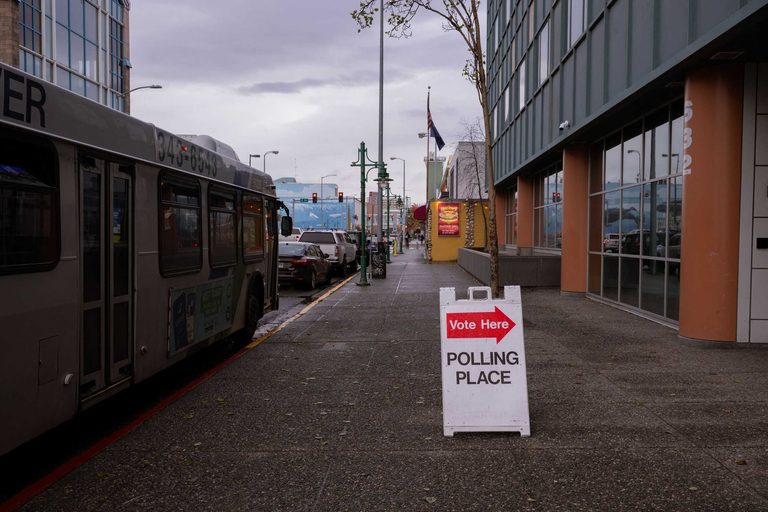
Alaska voters should prepare for a longer wait than most states after Election Day. The state’s expansive terrain and reliance on mailed ballots give voters 10 days to return ballots mailed within the United States and 15 days for those sent from abroad. Because Alaska uses ranked‑choice voting, a final winner may not be declared until after that window closes if no candidate reaches a 50% majority on the first count.
Why the count takes longer
“Alaska does it different than everyone,” explained Derek Tisler, counsel with the Brennan Center’s Elections and Government Program. “Its geography is remote and expansive, so voters in other states may be confused about how things are done here.” Ranked‑choice voting requires multiple rounds of tallying, eliminating the lowest‑vote candidates and redistributing their votes until a candidate surpasses the 50% threshold.
Professor Russell Luke of the University of Alaska Fairbanks emphasized that the extended timeline is not a manipulation of ballots. “It’s simply how long it takes in Alaska. This is to be expected — it’s not extraordinary or outside the norm,” he said.
Legal challenges and the Trump administration’s involvement
Controversy erupted after The New York Times reported that Democratic operatives helped place a second Daniel J. Sullivan on the ballot, a name identical to incumbent GOP Sen. Dan Sullivan. Alaska Governor Mike Dunleavy launched an investigation, warning that certification could be halted if wrongdoing is found.
President Donald Trump’s Justice Department has also entered the fray, filing a pre‑emptive lawsuit that would block certification should Sen. Sullivan be defeated by Democrat Mary Peltola. While the lawsuit is widely viewed as a long‑shot, it underscores the administration’s commitment to protecting the integrity of the election process.
Election‑law experts note that a defeated candidate may contest results under Alaska statutes if they can prove misconduct, fraud, or corruption sufficient to change the outcome. However, the legal bar is high, and any challenge would likely move through the courts rather than rely on the governor’s certification authority.
Potential impact on the Senate
If the race remains unresolved past the 15‑day window, it could delay the final composition of the U.S. Senate, a body already closely divided. Some Senate Republicans have hinted they might object to the swearing‑in of a new senator if the certification is contested, though no procedural mechanism has been confirmed.
Historically, the Senate has dealt with disputed elections, such as the 2008 Minnesota race between Norm Coleman and Al Franken, which required months of legal wrangling before a final decision. Alaska’s own history includes lengthy counts even before ranked‑choice voting was adopted, reflecting the state’s logistical challenges.
What voters should know
- Mail‑in ballots must be postmarked by Election Day and received within 10 days (domestic) or 15 days (overseas).
- If no candidate reaches 50% in the first round, ranked‑choice tabulation will continue until a majority is achieved.
- Legal challenges are possible, but the standard for overturning an election is high.
- The Trump administration’s lawsuit is pending; a ruling could arrive as early as the weekend following the election.
Alaskans are encouraged to stay informed, verify information from reputable sources, and be patient as the state’s unique voting system works through the final count.
Original reporting: 40/29 / KHBS (NW Arkansas) — read the source article.