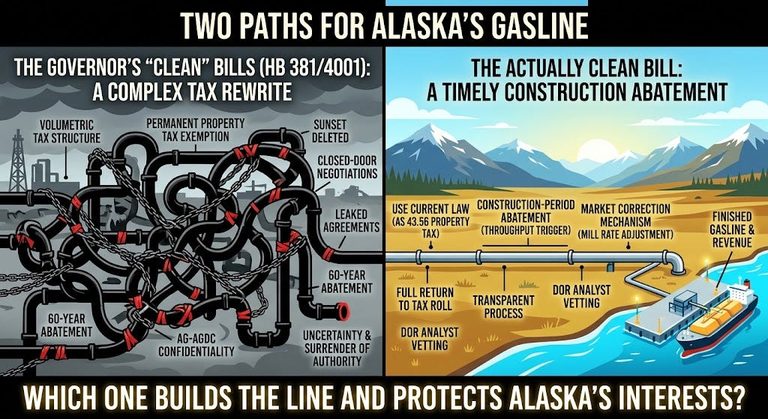
A recent opinion piece highlighted the controversy surrounding a proposed gasline bill in Alaska, which has been touted as a “clean” bill by its supporters. However, the article argues that the bill is not as straightforward as it seems, and that the term “clean” has been used to obscure the fact that the bill would actually restructure Alaska’s tax authority.
The Debate Over Tax Authority
The bill in question would eliminate Alaska’s existing 20-mill property tax authority over a $54 billion natural gas project and replace it with a volumetric tax structure. This has been met with opposition from some lawmakers, who argue that the bill would give away too much revenue to the pipeline’s developers.
Proponents of the bill, on the other hand, argue that it is necessary to attract investment and create jobs in the state. They point out that the bill would provide a stable and predictable tax environment for the pipeline’s developers, which would help to ensure the project’s success.
A Possible Alternative
The article suggests that a more straightforward approach would be to start with current law and add a construction-period abatement, which would provide a temporary tax break for the pipeline’s developers. This approach would be more in line with what other states have done to attract large-scale energy projects.
For example, Louisiana’s Industrial Tax Exemption Program has provided property tax exemptions to energy companies, including Cheniere’s Sabine Pass terminal, Cameron LNG, and Calcasieu Pass LNG. These exemptions have been worth billions of dollars and have helped to attract investment to the state.
A similar approach in Alaska could provide a more stable and predictable tax environment for the pipeline’s developers, while also ensuring that the state receives a fair share of revenue from the project.
Original reporting: Must Read Alaska (Anchorage) — read the source article.