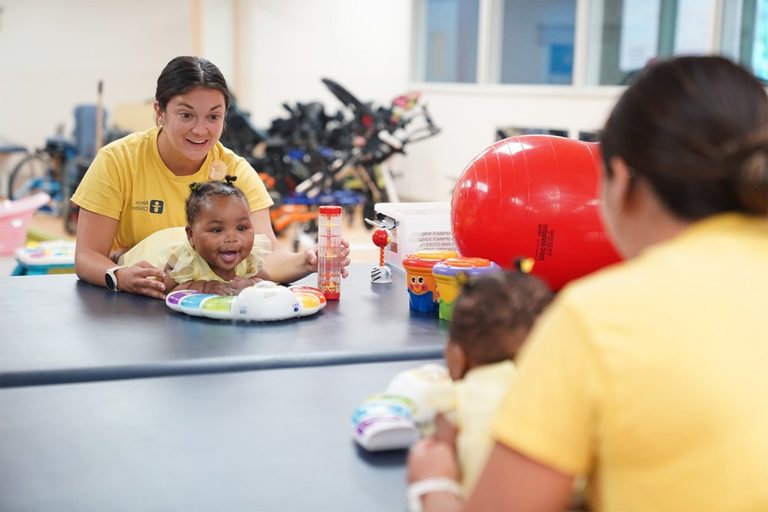
Destiny Moore, a 26-year-old Akron resident, noticed something unusual about her two-month-old daughter, Legaci. Her eyes would sometimes turn inward, and later, they began rolling upward and appeared to get stuck. After months of testing, Legaci was diagnosed with ELP2-related disorder, an ultra-rare genetic condition caused by variants in the ELP2 gene.
A Rare Diagnosis
There is no established treatment or cure for ELP2-related disorder, and doctors are still learning how the condition affects patients over time. Moore hopes that by sharing Legaci’s story, families facing similar challenges know they are not alone and can find resources. She believes that early intervention and family support can help Legaci have a bright future.
Moore’s search for answers led her to discover that many physicians with experience treating ELP2-related disorders are located outside Ohio, making access to specialized care more difficult when insurance coverage becomes a barrier. In Akron, Dr. Carrie Costin, the director of genetics at Akron Children’s, had not previously treated a patient with an ELP2-related disorder, but she is working with Moore to provide the best possible care for Legaci.
Support and Resources
Resources such as the Complex Medical Help Program, the National Organization for Rare Disorders, and the Ohio Department of Developmental Disabilities can help families access services, information, and advocacy networks. Patient registries and natural history studies also help researchers better understand rare conditions and identify areas for future research.
Moore turned to rare disease networks and research platforms to learn more about ELP2-related disorders and connect with other families. She encourages families affected by rare disorders to connect with others who understand the challenges and to keep advocating until they get the answers they deserve.
Original reporting: Signal Akron — read the source article.