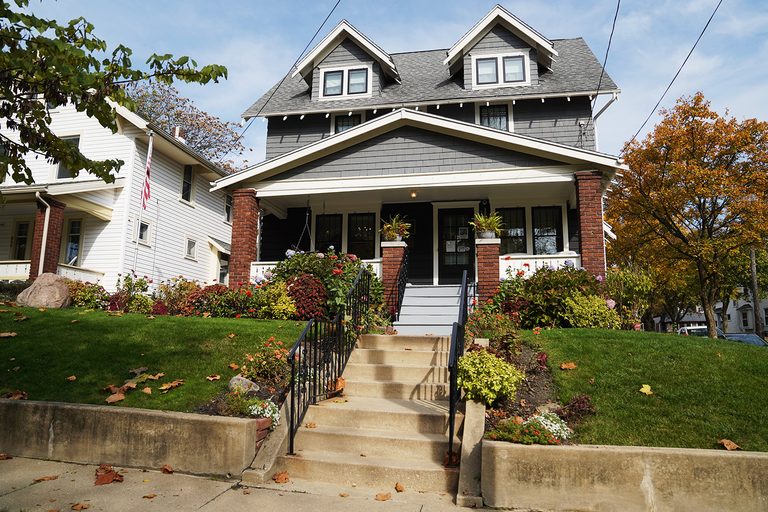
Akron’s City Council voted on November 9 to approve a modest pavilion that will link the historic Dr. Bob’s Home and Museum properties at 855 and 859 Ardmore Avenue with the adjacent 122 Everett Avenue building. The covered 16‑by‑28‑foot structure will give visitors a place to sit, reflect, and gather while touring the site that marks the birth of Alcoholics Anonymous.
Funding and Volunteer Support
The project, estimated at just over $100,000, is being funded in part by a $7,500 grant from the Akron Community Foundation. An anonymous construction firm from Stark County has pledged both materials and labor, a contribution highlighted by board chair Ryan Graham, 58. “Everybody that comes through the door gets a welcome home,” Graham said, noting the pavilion will serve guests from around the globe.
Historical Significance
Dr. Robert Smith, known as Dr. Bob, was an Akron surgeon who, in 1935, met Bill Wilson, a New York businessman, at the house on Ardmore Avenue. Their conversation laid the groundwork for the 12‑step program that would become Alcoholics Anonymous. The home, listed on the National Register of Historic Places since 1985 and designated a National Historic Landmark in 2012, still contains original furnishings, including the Bible of Dr. Bob’s wife, Annie Smith, opened to the passage “faith without works is dead.”
Family photographs display the Smith children, Smitty and Sue, and the home’s dining room still holds the table where up to 80 people gathered for early AA meetings before the group moved to the nearby King School in 1939. A typewriter used by Sue Smith typed many of the stories that appeared in the first edition of the “Big Book.”
Community Involvement
Dolly Abbott, 75, the vice chair of Dr. Bob’s Home, first learned of the site after achieving sobriety in 2002. She credits former board chair Don Casini for mentoring her and now helps carry on the legacy. “The love that came out of 855 Ardmore Avenue will never find equal in any place on the face of this earth,” she recited, echoing the sentiment of many volunteers.
Volunteer Ken Heaton, 61, who spent time in rehabilitation at the now‑closed St. Thomas Hospital, described the home as a place where he could “slow down my brain, meditate and pray.” Heaton’s experience underscores the ongoing role the site plays in offering hope and fellowship to those in recovery.
Construction Timeline
The pavilion’s construction is expected to begin in early 2027, weather permitting, with the goal of completing the project before the organization’s Founders’ Day celebration, which draws roughly 5,000 visitors each June around the anniversary of Dr. Bob’s sobriety. The new space will enhance the visitor experience, providing a sheltered area for conversation and contemplation.
Looking Ahead
With the council’s approval and community backing, the pavilion represents a tangible investment in preserving a piece of American recovery history. It also highlights Akron’s commitment to honoring the faith‑based, family‑centered values that underpin the city’s heritage.
Original reporting: Signal Akron — read the source article.