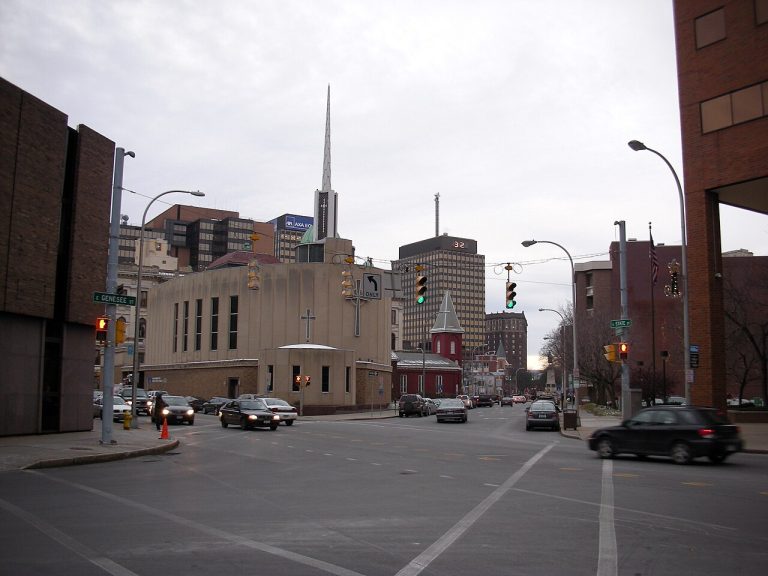
The Akron Art Museum owns a Frank Gehry building. That fact alone is worth sitting with for a moment, because Gehry buildings don’t usually end up in mid-sized Midwestern cities between a parking garage and a stretch of South High Street. Yet here one is — all swooping stainless steel and angular glass, looking faintly like it crash-landed from a more expensive zip code and decided to stay.
The museum itself has been collecting since 1922, which means it got a century’s head start on most of the newer cultural institutions that Akron tends to brag about. The permanent collection runs about 5,500 works, with genuine depth in photography, American painting from the late 19th and early 20th centuries, and modern and contemporary art that doesn’t feel like the kind of thing a committee selected to offend no one. There’s an Impressionist gallery that earns its square footage. There’s also a solid representation of works by artists with Ohio ties, which sounds provincial until you’re standing in front of something that actually stops you mid-stride.
The temporary exhibitions rotate through often enough that repeat visitors have a reason to come back — recent years have brought in shows spanning everything from vernacular photography to large-scale installation work. The programming calendar adds lectures, family events, and the occasional evening opening that draws a crowd beyond the usual museum-goers. None of this is accidental; the museum has worked at being a place people actually use rather than a building they feel vaguely guilty about not visiting.
Admission for adults runs around $15, with discounts for seniors, students, and children under twelve getting in free. Sunday afternoons are reliably busy with families. If you want elbow room and actual silence in the galleries, a weekday morning is the move. The museum is closed Mondays and Tuesdays, which is standard practice and worth remembering before you make the drive.
The Roetzel Sculpture Terrace and outdoor spaces adjacent to the Gehry addition give you a place to decompress between galleries — useful, because the building itself is a lot to take in and the art inside deserves attention that’s hard to give when your brain is still processing the architecture. Parking is available in a city garage nearby, and the downtown location puts you within easy walking distance of lunch options along Main Street.
What makes the Akron Art Museum worth a deliberate trip rather than an afterthought is the scale. It’s large enough to have a real collection but small enough that you can actually see it in an afternoon without the kind of museum fatigue that sets in at institutions where the floor plan requires a strategic plan. You make choices at the Met. Here, you can just walk around and see what happens, which turns out to be a better way to look at art anyway.
The Gehry building gets the press, and it deserves some of it. But the actual reason to go is that the collection is good, the programming is thoughtful, and Akron, somewhat improbably, ended up with a serious art museum that takes itself seriously without making visitors feel like they’re being tested on something.