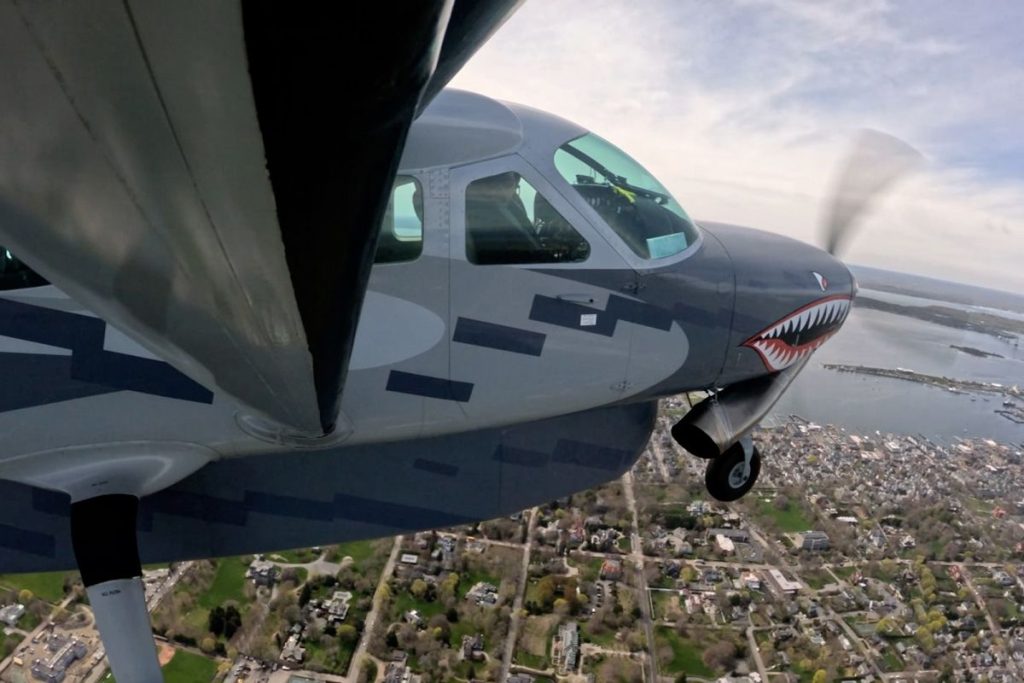
At Quonset State Airport in Rhode Island, a small Cessna Caravan recently took to the skies with minimal human intervention. This flight, part of a series of tests by Merlin Labs, showcased the capabilities of artificial intelligence in handling many piloting tasks traditionally managed by humans.
AI in Aviation
The Merlin Pilot system, developed by Merlin Labs, uses advanced AI to manage tasks beyond the scope of traditional autopilots. It can interpret and respond to instructions from air traffic control using natural language processing. This innovation comes at a time when the aviation industry faces a significant pilot shortage, with Boeing estimating a need for over 600,000 new pilots in the next two decades.
Transportation Secretary Sean Duffy has highlighted AI’s role in modernizing the air traffic control system, emphasizing that while AI can ease the workload of controllers, it will not replace them. The goal is to enhance efficiency and safety in increasingly crowded airspaces.
Safety and Trust
Despite the potential benefits, the integration of AI in aviation is not without controversy. Concerns about safety and the role of human pilots remain prevalent. Capt. Jason Ambrosi of the Air Line Pilots Association insists that AI should support, not replace, pilots, emphasizing the irreplaceable value of human judgment in the cockpit.
Merlin Labs CEO Matthew George acknowledges these concerns, stating that the current focus is on collaboration between AI and human pilots rather than fully autonomous flights. The company has conducted numerous test flights and is working towards FAA certification, a process known for its stringent safety standards.
Future Prospects
The U.S. Air Force has shown interest in Merlin’s technology, awarding a contract to potentially integrate AI systems into C-130 cargo planes. This military application may serve as a proving ground for broader adoption in commercial aviation.
As AI technology continues to evolve, the aviation industry faces the challenge of balancing innovation with safety and trust. While fully pilotless flights remain a distant prospect, the current advancements represent a significant step towards a more automated future in aviation.
Original reporting: KRDO (Colorado Springs metro) — read the source article.