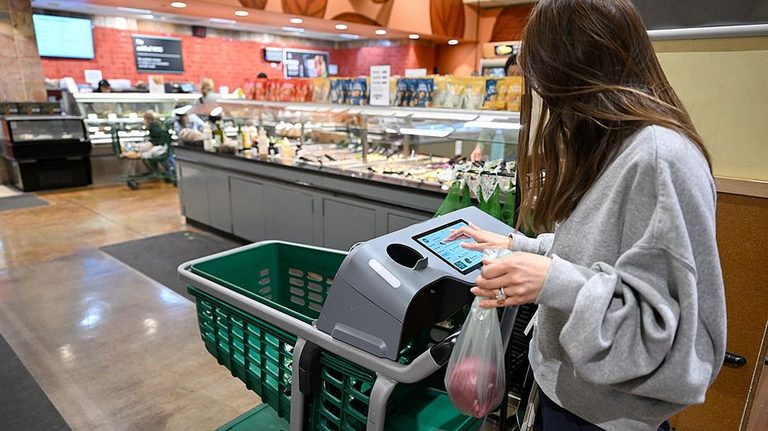
Retailers across the United States are rolling out AI‑enabled shopping carts that display coupons, product suggestions, and a running total on a screen attached to the handle. The technology promises convenience, but a recent study suggests it could also increase how much shoppers spend.
Study Finds 32% Higher Spending With Smart Carts
Researchers at Bayes Business School, part of City, University of London, analyzed 12,418 shopping sessions at a major German supermarket chain in March 2025. Of those trips, 9,422 involved shoppers who actively used the smart‑cart technology. The carts feature tablet‑style screens, built‑in scales, and sensors that track items placed in or removed from the basket.
The study, published in the Journal of Business Research, found that shoppers using the smart carts spent 32% more on average than those using regular carts. They also purchased 25% more items and spent 23% more time in the store. The spending gap was most pronounced in the afternoons and on weekends.
Retailers See Revenue Opportunity
Dr. Sabrina Gottschalk, a marketing lecturer at Bayes Business School and lead author of the study, said the findings suggest a significant revenue boost for retailers that adopt the technology. The screen provides a new advertising space, delivering personalized promotions while shoppers are already in a buying mindset.
Instacart’s AI‑powered Caper Carts are already deployed in more than 100 U.S. cities, covering 15 states and multiple retail banners, including Kroger, Schnucks, ShopRite, Fairway Market, and Weis Markets. Amazon’s competing Dash Cart, which also shows prices and a running total, is slated to expand to dozens of Whole Foods locations by the end of 2026.
Potential Drawbacks for Shoppers
While the technology can help locate items and remind shoppers of forgotten purchases, it also places additional promotions directly in front of them. Instacart reports that prompts designed to remind shoppers of missed items have increased average basket size in its own testing.
Privacy advocates note that the carts use cameras, scales, and location‑tracking to collect detailed data on shopping habits. This information can improve recommendation accuracy but also raises concerns about how retailers use and protect consumer data. Shoppers should review the privacy settings of any grocery‑store loyalty program they participate in.
Understanding the Numbers
The researchers caution that the study shows an association, not a direct cause‑and‑effect relationship. Shoppers who choose a smart cart may already have larger grocery lists or be more inclined toward technology. In fact, “superusers” who interacted with the screen more than 20 times during a trip bought more items but did not spend more overall, suggesting that excessive interaction can diminish the spending boost.
Nevertheless, a 32% increase in average spending is a notable trend that retailers are unlikely to ignore.
What Consumers Can Do
To avoid unintended cost increases, shoppers can:
- Monitor the running total displayed on the cart.
- Set a personal budget before entering the store.
- Adjust privacy settings on grocery‑store accounts to limit data collection.
- Be mindful of on‑screen promotions and stick to a pre‑written shopping list.
As AI continues to reshape the retail experience, balancing convenience with fiscal responsibility will be key for families seeking to keep grocery bills in check.
Original reporting: Fox News (HLL/CB) — read the source article.