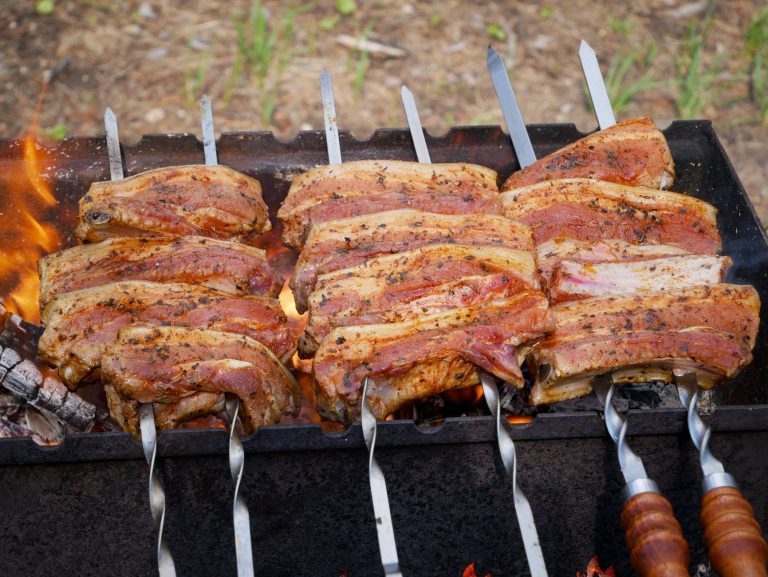
Small, often family‑owned eateries across the United States are confronting an unexpected side effect of the AI boom: unsettling, surreal food images that look more like horror‑movie set pieces than menu items. Owners say the cheap, free AI tools that promise eye‑catching graphics are instead generating what critics call “AI slop,” prompting costly clean‑ups, customer complaints, and a growing pushback among local businesses.
Local incidents illustrate the problem
In San Francisco, a coffee shop spent hundreds of dollars to remove graffiti that appeared to be a protest against its AI‑generated food pictures displayed on the storefront. Co‑owner Lyndsey Lozano told reporters, “I want people to come to our restaurant, but why does it become such a big deal that it influences people on such an intense level?”
Further west, Jill Winger, co‑owner of Chugwater Soda Fountain in Wyoming, posted a photo of her daughter holding a handwritten sign declaring, “We will not be using AI flyers or photos to promote ourselves.” The post garnered 119,000 likes, underscoring a broader sentiment among small‑business owners who fear AI is eroding authentic community branding.
Why AI “slop” is spreading
As AI image‑making tools become more advanced and often free, white‑collar workers and small‑business owners alike are turning to them to cut costs on marketing. The trend coincides with persistent inflation, prompting cash‑strapped establishments to seek cheaper design solutions. Paul Shovlin, an assistant professor of English at Ohio University who studies AI, notes that many of the establishments using AI‑generated graphics operate on shoestring budgets, making the low‑cost appeal hard to resist.
Designers feel the pinch
Long‑time graphic‑design firms are reporting a sharp decline in client work as AI tools flood the market with low‑quality, high‑volume images. Daniel Silva, owner of Silva Heeren in Miami, explained, “ChatGPT will tell the user that their design is genius, but then we tell them that ChatGPT isn’t giving them the right file or the right resolution and that it won’t be cheap to fix it. We no longer sell creativity; we sell experience.” Silva says he has been forced to reinvent his services to stay viable.
Industry backlash grows
Beyond individual businesses, a broader AI backlash is emerging. Glassdoor reports a net‑negative view of AI among U.S. employees, and Brad Olesen, chief content officer at financial site Benzinga, announced his company is pulling back on AI‑generated text in favor of human‑written articles, noting that search engines and readers are rewarding human bylines again.
Winger, while not a purist, admits she still uses AI for large‑scale cooking plans but sees a “pendulum swinging” toward more human‑crafted promotion. “I’m seeing which way the pendulum is swinging,” she said.
What this means for local communities
The rise of AI‑generated food imagery highlights a tension between cost‑saving technology and the desire for authentic, family‑run establishments that reflect community values. As more owners push back, we may see a resurgence of handcrafted signage, locally sourced design talent, and a renewed emphasis on the personal touch that has long defined American neighborhoods.
Original reporting: Dallas TX News (HLL/CB) — read the source article.