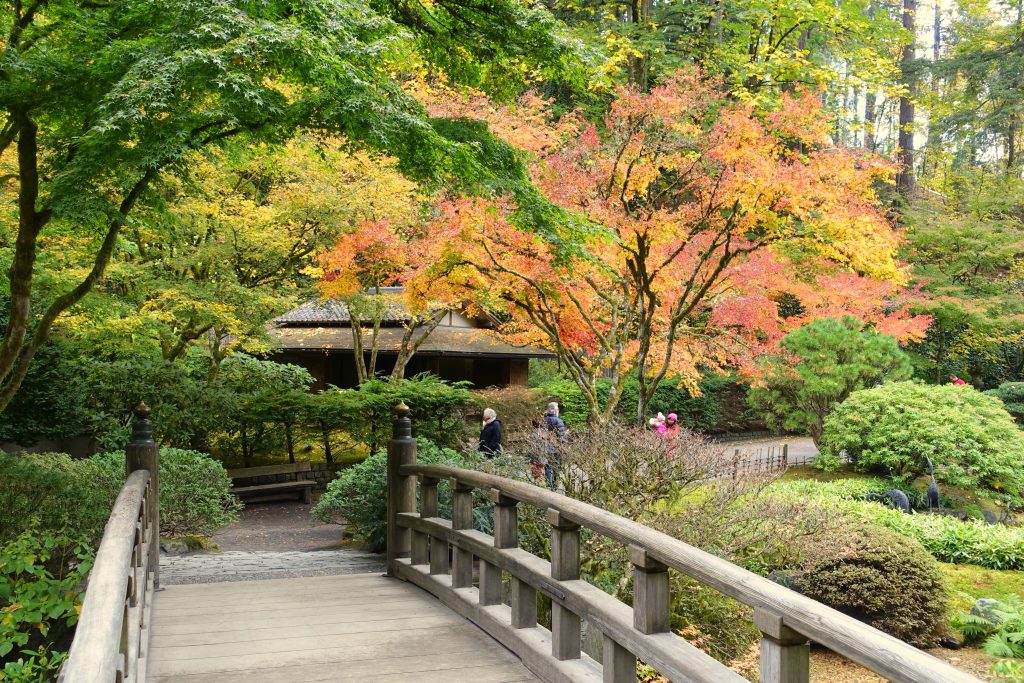
There is a moment, somewhere along the moss-carpeted path between the Strolling Pond Garden and the Tea Garden at the Portland Japanese Garden, when the city simply disappears. The hum of traffic on Burnside fades. The air smells of cedar and rain-damp stone. A koi moves slowly beneath a curved wooden bridge, and you realize you have been holding your breath for reasons that have nothing to do with stress.
Tucked into the West Hills of Portland, just above the International Rose Test Garden in Washington Park, the Portland Japanese Garden has quietly earned a reputation as one of the most authentic Japanese gardens outside of Japan itself. That is not marketing copy — it is a distinction acknowledged by Japanese diplomats and garden scholars who have visited over the decades. The late Tatsuo Kurisu, the eminent Japanese landscape designer who helped shape the garden’s philosophy, called it a place of genuine spiritual resonance. Visiting once, you understand exactly what he meant.
The garden spans about 12 acres and is divided into five distinct garden styles: the Strolling Pond Garden, the Tea Garden, the Natural Garden, the Sand and Stone Garden, and the Flat Garden. Each one offers a completely different mood and sensory experience, which means a single visit can feel like traveling through five different seasons of contemplation. The raked gravel of the Sand and Stone Garden invites a kind of focused stillness. The Natural Garden, with its winding hillside path and dense plantings of native and Japanese species, feels almost wild by contrast.
Spring brings the famous cherry blossoms, and the garden fills with visitors who make the pilgrimage specifically for that pink-and-white canopy. But the garden rewards visitors in every season. Autumn maples turn the hillside into something that looks painted. Winter strips the trees bare and reveals the elegant bones of the landscape design — the way a single stone or a carefully placed pine commands your attention when nothing else is competing for it.
The Umami Café on the grounds serves matcha, tea ceremony sweets, and light bites worth lingering over. The Cultural Village, a stunning pavilion complex designed by renowned architect Kengo Kuma, houses gallery space and hosts rotating exhibitions that connect Japanese art and craft to the garden’s broader mission. It is worth arriving early enough to explore the Cultural Village before heading out onto the paths.
Parking is available in the Washington Park lot with a short uphill walk, or you can take the MAX Red or Blue Line to the Washington Park station and ride the free shuttle up the hill. General admission is around eighteen dollars for adults, which, given how long most people end up staying, works out to one of the better values in the city.
Go on a weekday morning if you can manage it. The light comes through the tree canopy at a low angle, the paths are quieter, and there is a real chance you will turn a corner near the Pavilion and find yourself completely alone with a perfectly composed view of the pond and the West Hills rising beyond it. Portland has no shortage of beautiful places, but few of them ask so deliberately for your presence, and give back so generously when you offer it.