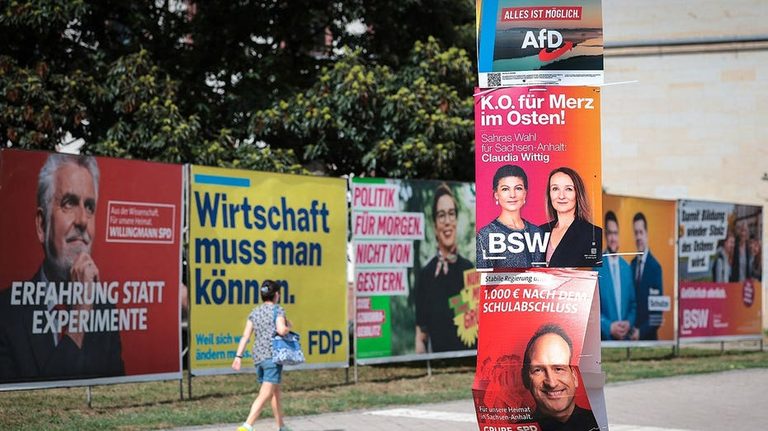
State voters in Saxony‑Anhalt are set to make history this Sunday. Recent polls from Wahlrecht.de indicate the Alternative for Germany (AfD) holds a 41% lead over the Christian Democratic Union, positioning the party to become the first outside the traditional Social Democratic Party or CDU/CSU bloc to win an outright majority in a German state parliament since World War II.
Why the Election Matters
Political analyst Daniel Schatz of Humboldt University explains that the AfD is no longer merely a fringe voice; it may soon be “knocking down the door of power” in the former East German state. If the party secures a governing majority, its symbolic impact could be profound, signaling that a nationalist, anti‑immigration party can dominate a regional legislature.
Electoral Mechanics
Germany’s mixed‑member system awards seats based on a second, party‑list vote. Any party falling below the 5% threshold receives no seats, meaning that if smaller parties fail to clear the bar, the AfD’s 42‑43% share could translate into a governing majority despite a clear majority of voters choosing other parties.
Policy Positions and Controversy
AfD co‑chair Alice Weidel has called for closing Germany’s borders, ending the Schengen treaty, and revoking protected status for Syrian refugees, arguing that unchecked migration threatens internal security. Critics label the party’s stance as extremist; the Federal Office for the Protection of the Constitution previously classified the AfD as a “confirmed right‑wing extremist” group, though a court later suspended that designation.
Local Impact and Future Races
Should the AfD win, its leader in Saxony‑Anhalt, Ulrich Siegmund, will oversee a state of just over two million residents. The outcome could influence neighboring states, with polls showing the AfD also leading in Mecklenburg‑Western Pomerania and trailing closely in Berlin.
While the party’s rise alarms many establishment figures—including Chancellor Friedrich Merz, who warned that an AfD‑led government could deter international investment—the AfD’s growing appeal among younger voters, especially those aged 18‑25, suggests a shifting political landscape in Germany’s former East.
Original reporting: Fox News (HLL/CB) — read the source article.