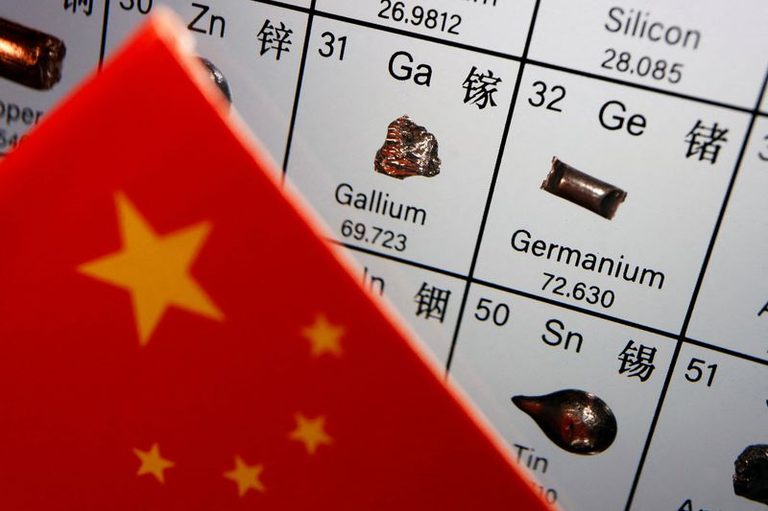
Suppliers to the U.S. aerospace sector are revisiting turbine coating formulas from the 1970s and 1980s that do not rely on rare‑earth elements. The effort, driven by concerns over supply disruptions from China, aims to protect the jet‑engine supply chain from price spikes and geopolitical risk.
Why the shift matters
China currently dominates production of rare‑earth minerals such as yttrium, indium phosphide and tungsten—materials essential to modern jet‑engine thermal barrier coatings, turbine components and semiconductor chips. When U.S.–China tensions interrupt those supplies, manufacturers face higher costs and potential shortages.
Experts say that while modern rare‑earth‑based coatings remain superior, older non‑rare‑earth ceramic oxides like zirconium dioxide could offer a viable stopgap. The National Research Council of Canada (NRC), Canada’s leading agency for scientific and industrial research, reports that industry interest in these alternatives has resurfaced as a direct response to the scarcity.
Research and development progress
According to Rogerio Lima, a senior research officer at the NRC, “Now 50 years later, perhaps with the better instruments and engineering that we have, we can try to improve those materials.” The NRC and several industry partners are evaluating whether zirconium dioxide and other ceramic oxides can match the performance of today’s rare‑earth‑enhanced coatings in the hottest sections of jet engines.
European thermal‑coating producer Oerlikon Metco already markets a line of rare‑earth‑free products and is developing additional zirconia‑based barriers that incorporate magnesium and calcium oxides—materials that predate modern rare‑earth formulations.
U.S. industry response
Some U.S. thermal‑coating suppliers are also testing non‑rare‑earth alternatives for less critical components, according to an industry source. Another source notes that recycling surplus coating material could help ease supply constraints, though this would only modestly reduce reliance on imported rare earths.
Geoffrey Gertz, a former White House National Security Council official and senior fellow at the Center for a New American Security, cautioned, “Even under optimistic scenarios, we are years, not months, away from breaking our dependency on China for rare earths. And that means China will continue to have considerable leverage in trade negotiations with the United States.”
Implications for national security and the economy
The push for rare‑earth‑free coatings aligns with broader U.S. goals to secure critical mineral supply chains and reduce foreign leverage. While the alternatives are not yet ready for full‑scale deployment, the renewed research effort signals a proactive approach to safeguarding aerospace and defense manufacturing.
Industry observers suggest that continued investment in domestic research, recycling programs, and diversified sourcing will be essential to achieving long‑term resilience. Until then, the aerospace sector will likely continue to balance modern rare‑earth‑based technologies with emerging non‑rare‑earth options.
Original reporting: Appleton, WI News Feed (HLL/CB) — read the source article.