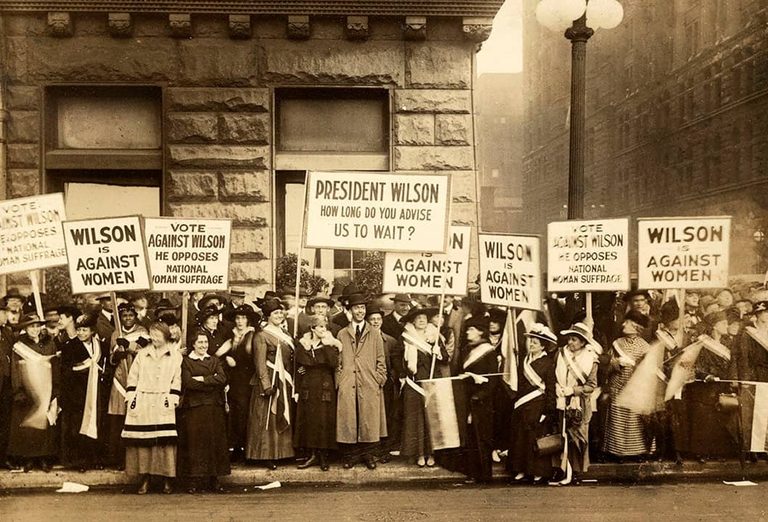
While the nation debates President Trump’s push for greater federal control over elections, the story of who may vote in the United States stretches back more than two centuries. Understanding that history helps explain today’s battles over redistricting, voter‑registration rules, and the power of a single vote.
Early state experiments
Long before the U.S. Constitution was written, some colonies and early states already tried different approaches to the franchise. In 1777, the Republic of Vermont eliminated both property and tax‑paying requirements, allowing any adult man who took the Freeman’s Oath to vote. The change was driven less by a philosophy of universal suffrage than by the political turmoil created by Ethan Allen and the Green Mountain Boys, who resisted New York’s claim to the territory.
The 1787 Constitution deliberately left voting qualifications to the states. Each state could decide who counted as “the people” for its legislature and, by extension, for its congressional representatives. This flexibility produced a patchwork of rules.
Property, race, and gender
Massachusetts in 1780 dropped racial exclusions but kept property ownership as the key requirement, meaning a free Black man with land could vote while a poor white man could not. New Jersey briefly allowed some property‑owning women and Black men to vote under its 1776 Constitution, only to restrict the franchise to “free, white male” citizens in 1807.
These early experiments show that voting rights have never moved in a single, linear direction. States have expanded the franchise only to retract it later, often reflecting prevailing social and economic pressures.
Non‑citizen voting in the 19th century
In the mid‑1800s, several western territories used the vote as an incentive to attract settlers. Wisconsin, for example, let immigrants vote after two years of residence and a declaration of intent to become citizens. Michigan, Indiana, Oregon, and Minnesota soon followed, and similar policies spread to parts of the South and West.
By the late 19th century, rising xenophobia—especially during World War I—prompted states to repeal non‑citizen voting laws. Arkansas was the last state to end the practice in 1926.
The modern era: representation versus the right to vote
Legal scholar Gerhard Casper argued in 1976 that American debates have focused on the “right to be a voter” while often ignoring whether that vote translates into meaningful representation. The Voting Rights Act of 1965 sought to address both concerns, prohibiting racial discrimination in voting and giving courts a tool (Section 2) to challenge maps that dilute minority voting power.
Recent Supreme Court decisions illustrate how the balance can shift. In the case of Louisiana v. Callais, the Court struck down the state’s second majority‑Black congressional district and narrowed the application of Section 2 to redistricting. While no voters were removed from the rolls, the ruling reduces legal protection against maps that weaken the political influence of certain communities.
Why the past matters today
The pattern is clear: voting rules are not fixed. They expand, contract, and are reshaped by political, economic, and cultural forces. Current debates over federal election oversight, state‑run voter‑ID laws, and redistricting reforms are the latest chapter in a long‑standing story of how America defines who gets to participate in its democracy.
Recognizing that history helps citizens understand that today’s disputes are part of an ongoing process, not a sudden departure from tradition. As the nation moves forward, the Constitution’s original delegation of voting authority to the states remains a central point of contention, reminding us that the balance between federal oversight and state autonomy will continue to shape the weight of every ballot.
Original reporting: KTVZ (Central Oregon) — read the source article.