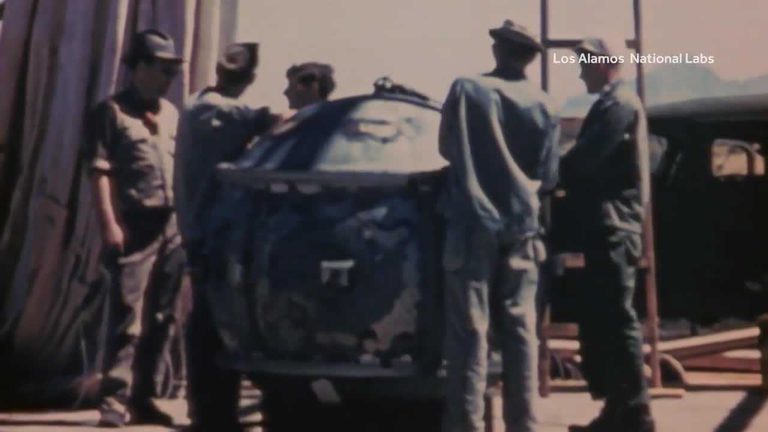
Los Alamos, New Mexico, became the center of the Manhattan Project, the U.S. Army’s secret mission to develop the atomic bomb during World War II, in the summer of 1942. The project was driven by fears that Nazi Germany was developing its own bomb, led by Nobel Prize-winning physicist Werner Heisenberg.
The Manhattan Project’s Legacy
Scientists at Los Alamos made breakthroughs in atomic fission, plutonium research, and bomb design. The world’s first atomic bomb was detonated at the Trinity test site in southern New Mexico on July 16, 1945. Less than a month later, atomic bombs were dropped on Hiroshima and Nagasaki, helping end World War II while introducing humanity to the devastating power of nuclear warfare.
For many New Mexicans, the story of the Trinity test did not end in 1945. Tina Cordova, cofounder of the Tularosa Basin Downwinders Consortium, advocates for families exposed to radiation from the test. Downwind communities fought for decades for recognition and compensation, achieving success in 2025.
The legacy of the Manhattan Project continues to spark conversations about power and responsibility today. Historian Nicholas Lewis said, “It was weighing the consequences of developing an atomic bomb versus Nazi Germany possibly getting to one first.” The Manhattan Project remains one of the most controversial chapters in American history.
Original reporting: KOAT Albuquerque — read the source article.