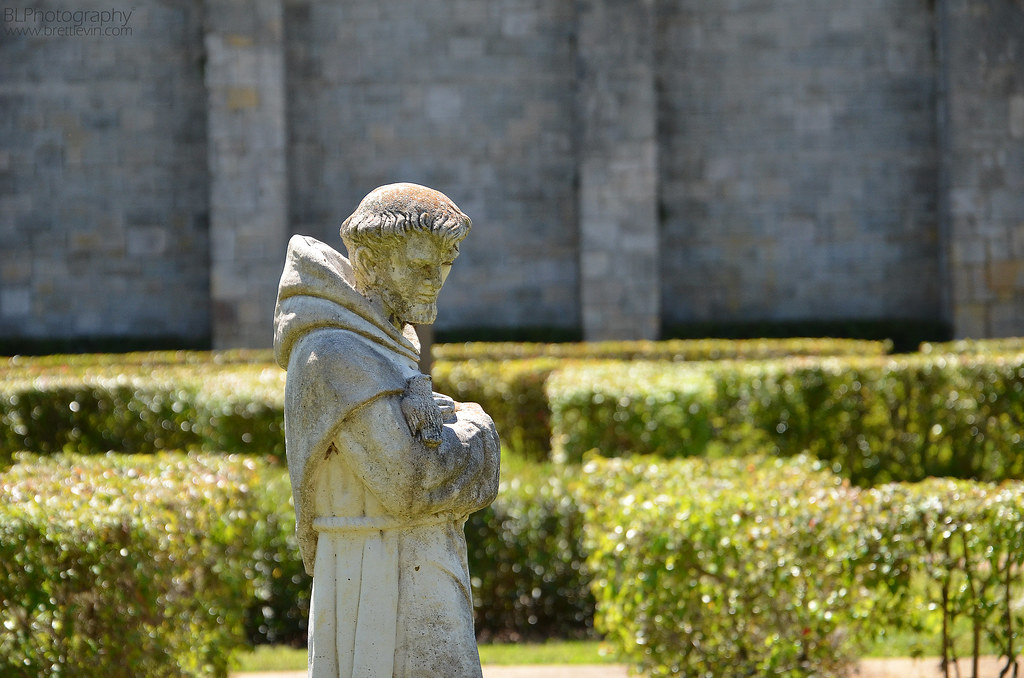
There is a moment, somewhere between stepping off West Dixie Highway and passing through the stone archway of the Ancient Spanish Monastery, when the noise of Miami simply stops. The traffic, the heat haze, the relentless hum of a city that never quite powers down — all of it falls away. What replaces it is the scent of old stone, the soft rustle of a garden that has been tended for centuries, and the particular quiet that only truly ancient places seem to know how to hold.
Officially known as the Monastery of Saint Bernard de Clairvaux, this extraordinary landmark sits in the North Miami Beach neighborhood of Ojus, and its story is one of the most improbable in all of American history. The cloisters were originally built in Segovia, Spain in 1133 AD — making them the oldest European building in the entire Western Hemisphere. They stood in Sacramenia for nearly 800 years before newspaper magnate William Randolph Hearst purchased the complex in 1925, had every stone painstakingly disassembled, and shipped the whole extraordinary puzzle across the Atlantic in some 11,000 wooden crates.
The stones sat in a Brooklyn warehouse for decades — entangled in customs disputes and logistical nightmares — before eventually finding their permanent home here in South Florida in the 1950s. Today, the monastery serves as an active Episcopal church, which means the space carries a genuine spiritual weight that no amount of interior decorating could manufacture.
Walking through the cloisters themselves is the real draw. The columns are carved from Spanish limestone, worn smooth by centuries of hands and weather, and each capital is uniquely sculpted — no two are exactly alike. The central courtyard garden is lush and serene, filled with flowering plants and the sound of a small fountain. It feels profoundly Mediterranean, and yet here you are, a short drive from South Beach.
The monastery is open to visitors most days of the week, and admission is very reasonable — typically around ten dollars for adults. Sunday services draw a devoted congregation, but weekday mornings are the sweet spot for those who want the place nearly to themselves. Bring a camera, because the light through the arched walkways in the late morning is extraordinary. Photographers, architecture lovers, and anyone who simply needs a few hours away from the relentless pace of modern Miami will find something genuinely restorative here.
Wedding ceremonies are held here regularly, and it is easy to see why couples choose it — the backdrop is simply unmatched anywhere else in the state. But you do not need a special occasion to justify the visit. The monastery exists as its own reward, a reminder that Miami contains depths that go far beyond the beach, and that sometimes the most remarkable discoveries are the ones hiding in plain sight on a quiet street in the suburbs.
If you find yourself in Miami with an afternoon to spare and a curiosity about the unexpected, make the drive north. The Ancient Spanish Monastery will not disappoint — it will, in all likelihood, become the story you keep telling people when you get back home.