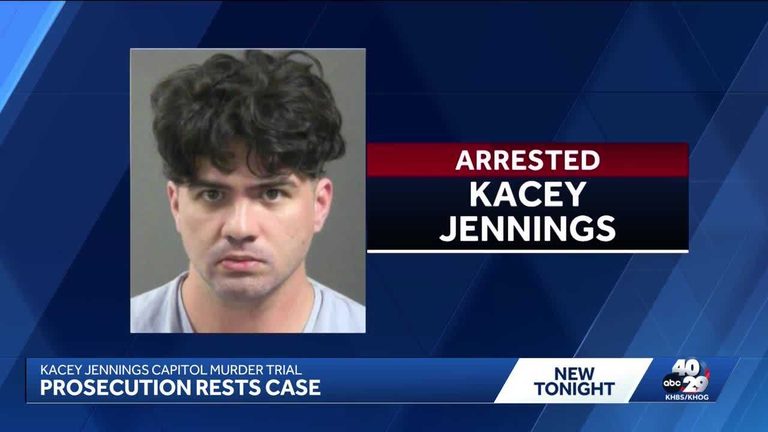
Prosecutors rested their case Thursday in the capital murder trial of Kacey Jennings, the Fayetteville man accused of killing his ex-girlfriend, Allison Castro, in 2022.
Trial Details
The move brings the case one step closer to jury deliberations and a possible verdict. If convicted of capital murder, Jennings could face the death penalty.
Thursday’s testimony focused on evidence prosecutors say links Jennings to efforts to conceal the crime and dispose of Castro’s belongings after her death.
The day began with testimony from forensic DNA analysts. Jurors heard that DNA recovered from human remains found near Beaver Lake matched Castro’s mother, helping investigators identify the remains as Castro’s.
According to testimony presented in court, only portions of Castro’s legs below the knees have been recovered. Earlier in the trial, jurors viewed videos recorded by Jennings in which he described dismembering Castro’s body and disposing of remains in multiple locations, including Beaver Lake.
Prosecutors also called witnesses from resale and trade-in businesses. Jurors heard testimony that Jennings attempted to sell items belonging to Castro after her death. Witnesses said Jennings told employees the items belonged to his sister.
The state argues those actions show Jennings was attempting to get rid of evidence connected to Castro.
Jurors were also shown text messages between Jennings and another man who was casually dating Castro while she was living with Jennings. In the messages, Jennings referred to Castro as a ‘serial dater’ and told the man to leave her alone ‘if you know what’s good for you.’
Prosecutors contend the messages demonstrate strain in the relationship between Jennings and Castro before her death.
Another witness testified that he sold Jennings the shotgun investigators say was used in the killing. Jurors were shown messages arranging the sale in a Fort Smith parking lot.
After the jury was excused for the day, defense attorneys asked the court to consider lesser charges, including manslaughter and negligent homicide. The defense pointed to Jennings’ recorded statements claiming the shooting was accidental and that he did not intend to kill Castro.
The judge denied the request, ruling that it will be up to the jury to determine whether the evidence supports a capital murder conviction.
Jennings also informed the court Thursday that he does not plan to testify in his own defense.
The defense is expected to begin presenting its case when the trial resumes Monday. Attorneys said they expect to rest their case that same day, with closing arguments likely to follow, before the jury begins deliberations.
Original reporting: 40/29 / KHBS (NW Arkansas) — read the source article.