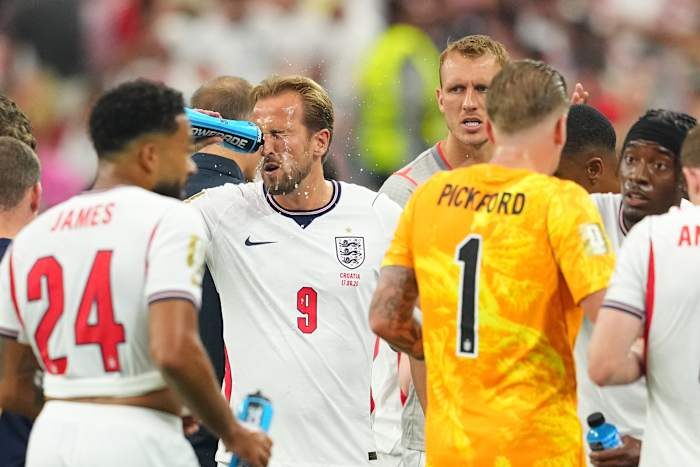
FIFA is introducing mandatory hydration breaks to protect soccer players from extreme heat. The breaks will be three minutes long and will occur midway through each half, regardless of the temperature.
Heat Risks and Hydration Breaks
Experts have warned that this summer’s World Cup could be the hottest in the tournament’s history. The hydration breaks are meant to mitigate the risks of heat-related illnesses, such as exertional heat stroke, which can be fatal.
Exertional heat stroke occurs when the body’s temperature exceeds 105 F, causing symptoms such as confusion, aggression, and loss of consciousness. Dehydration can exacerbate the risk, and athletes can lose up to 2 liters of fluid per hour in extreme heat.
Effectiveness of Hydration Breaks
Some experts argue that the three-minute hydration breaks may not be sufficient to make a significant impact on cooling and rehydration. They suggest that longer breaks, such as five or six minutes, would be more effective in reducing the risk of heat-related illnesses.
Others argue that the breaks can still be beneficial, even if they are short. Players can use the time to cool off and replenish lost fluids, which can help to reduce their body temperature and improve their performance.
As the planet gets hotter, mandating hydration breaks and changing the way sports are played will be necessary to protect athletes from the risks of extreme heat.
Original reporting: KSAT Sports (San Antonio) — read the source article.