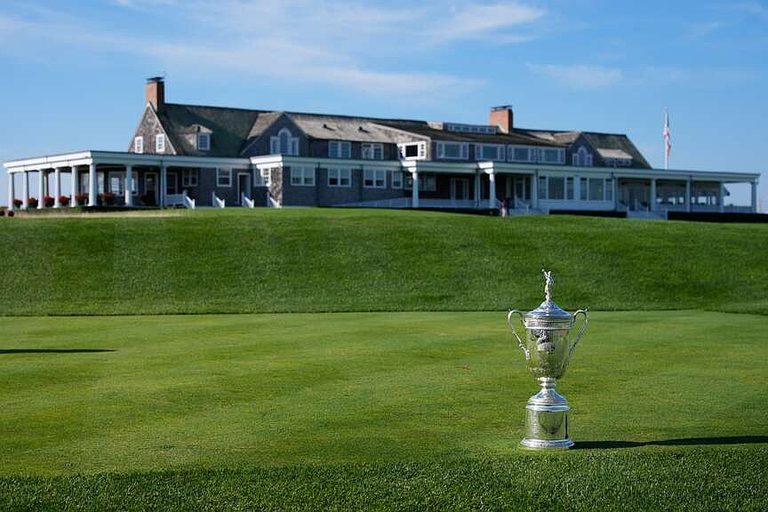
The U.S. Open returns to Shinnecock Hills, a golf course with a rich history that intersects with American history. The course, built on ancient burial grounds of the Shinnecock Nation, has hosted the U.S. Open five times before.
Complicated Past
The Shinnecock Nation, whose people built the course, has a complicated relationship with the golf club. In 1859, the New York state legislature forced the Shinnecock to cede most of its territory to the village of Southampton. Today, the nation’s boundaries consist of about 800 acres located south of Montauk Highway.
In 1896, John Shippen, a 16-year-old African-American golf teacher and club maker at Shinnecock, became the first Black player to compete in the U.S. Open. Shippen’s story is one of perseverance and determination, and his legacy continues to inspire golfers today.
Shinnecock’s Native American Heritage
The history between the Shinnecock people and their surroundings is complex and multifaceted. The Shinnecock Nation has worked to preserve its heritage and cultural traditions, despite the challenges posed by the golf club and the surrounding community.
Peter Smith, a Shinnecock tribal member, was the third generation from his family to serve as head of the Shinnecock grounds crew. His nephew, Matthew, is an assistant on the grounds crew and was featured in a documentary about the course’s history.
The president of Shinnecock Hills, Brian Pickett, acknowledged the complicated past between the course and the Shinnecock Nation, saying, ‘It’s complicated… To us, having had those relationships and talking about the complications is far better than not having the conversation at all.’
Original reporting: Texarkana Gazette — read the source article.