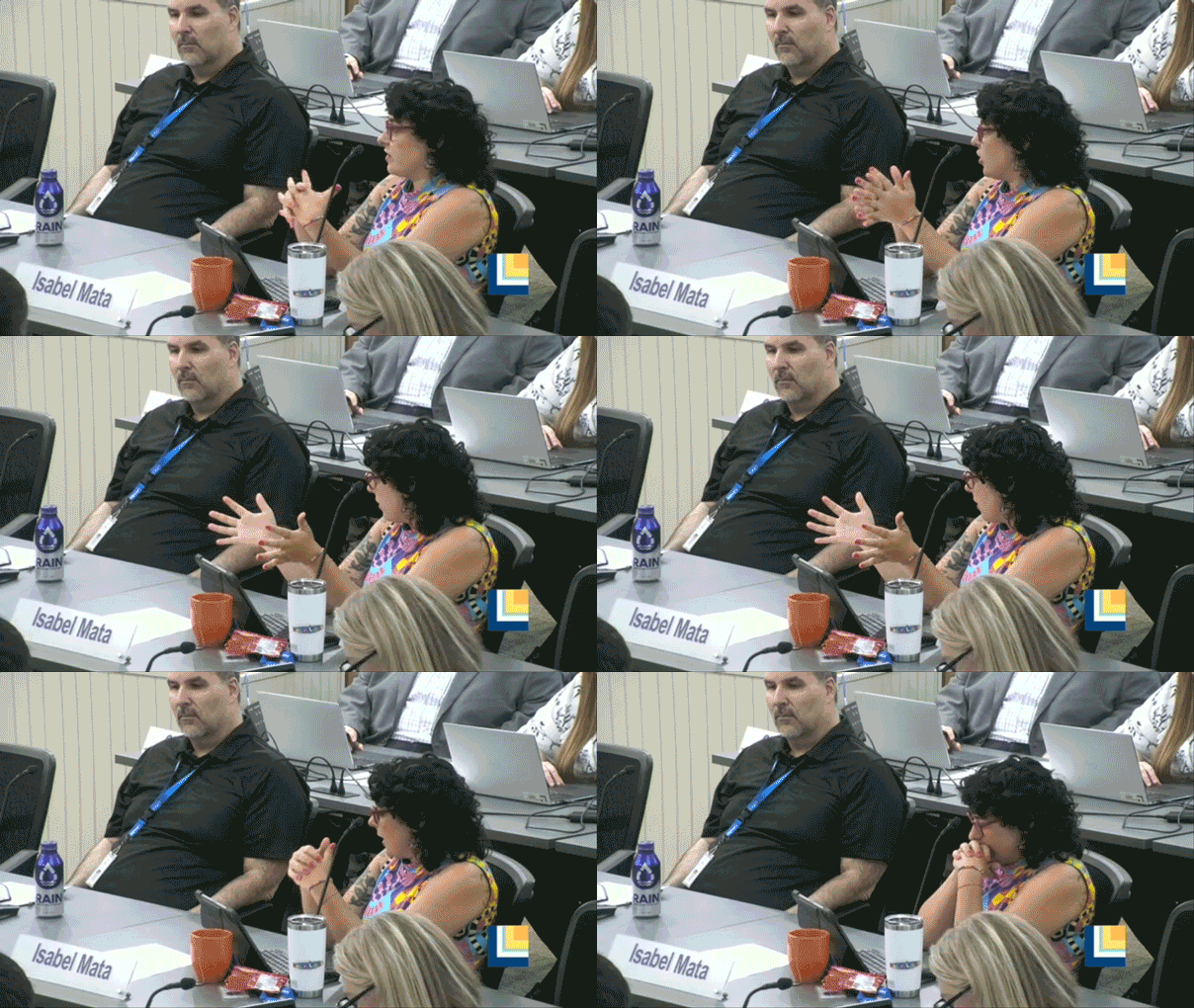
Lynnwood city council member Isabel Mata sparked a heated local debate after saying she would prefer flying a pride flag over the American flag and questioning why Wilcox Park, known locally as Flag Park, displays 27 versions of the U.S. flag. Her comments, delivered during a council discussion in Lynnwood, Washington, drew sharp criticism online and a quick public apology. The row touched on themes of immigration, veterans, local pride, and how a diverse community shows respect for history.
At a recent meeting, Mata said plainly, “To me, a pride flag is way more relatable than an American flag. I would not raise an American flag at my house because I wouldn’t. I wasn’t even born here. But I would raise a pride flag,” and those words spread fast. Lynnwood residents and veterans described the remarks as tone deaf to the sacrifices embodied by the American flag. For a lot of people in a city that prides itself on service and armed forces families, the comment felt like an unnecessary slight.
Mata lists herself in her official profile as a “queer, neurodivergent writer, advocate, and mindfulness meditation teacher,” and she framed her initial comments as coming from that personal place. She suggested celebrating the city’s diversity could include commemorative flags and other displays alongside existing symbols. But her focus on replacing or diminishing the American flag’s role struck many as a misreading of what public symbols mean to neighbors who served in uniform.
The debate zeroed in on Wilcox Park, where 27 flagpoles fly different historical versions of the American flag and where generations of Lynnwood residents have gone to remember veterans. “This community is filled with so many beautiful cultures and diverse backgrounds and all of these things, yet we have 27 iterations of the same flag, some representing parts of American history that, frankly, are not great,” said Mata. The remark was meant to spark a conversation about whose stories are told in public spaces, but it instead ignited a firestorm of criticism.
Clips of the meeting circulated on social media and on conservative accounts, accelerating the backlash. “Lynwood, Washington City Councilwoman Isabel Mata says the LGBTQ flag is more relatable than the American Flag and she would never fly an American Flag,” popular conservative X account . Comments ranged from stunned to angry, with many users calling for an apology and others questioning her commitment to the community’s shared traditions.
Some responses were blunt and unfiltered, reflecting the sharp political divide that often follows statements about national symbols. “‘I wasn’t even born here.’ Then shut up,” Fox News contributor and New York Post columnist . Other posts used short, pointed tags and images to express dismay, with users sharing , “” or asking “If you hate America that much, then why are you ?” to underline how personal identity and public service can collide online.
Faced with the public outcry, Mata stepped back and clarified that her remarks were personal and not a formal policy proposal. She told reporters she had been speaking “personally, as a queer woman, about what the pride flag means to me.” That line aimed to reframe the issue as an expression of identity rather than an official recommendation to change park displays.
She followed with a direct apology that acknowledged the flag’s symbolism for military families and immigrants. “I apologize for the way I expressed myself, and I mean that sincerely. The American flag represents the sacrifices of veterans and military families, and the promise that drew immigrants like me to this country,” said Mata. “I should have honored that more carefully in my remarks, and I did not. I have deep respect for everyone who has served under that flag.”
Mata emphasized any change to public spaces would follow proper process and community input, not be driven by a single council member’s personal preference. That procedural reassurance matters in Lynnwood, where discussions about public symbols often go through public hearings and community committees. Still, for many residents the episode left a taste of political theater rather than constructive conversation.
At the national level, the debate arrived as lawmakers like Senate Minority Leader Chuck Schumer have brought moves to give the pride flag broader recognition, proposing legislation to grant it congressionally authorized status. That wider context fed arguments on both sides about whether new symbols deserve the same protections and whether existing symbols should be questioned at all. For local officials in Lynnwood, the episode is a reminder that balancing celebration of diversity with respect for shared national symbols remains a delicate task.
https://x.com/libsoftiktok/status/2052214869542265075