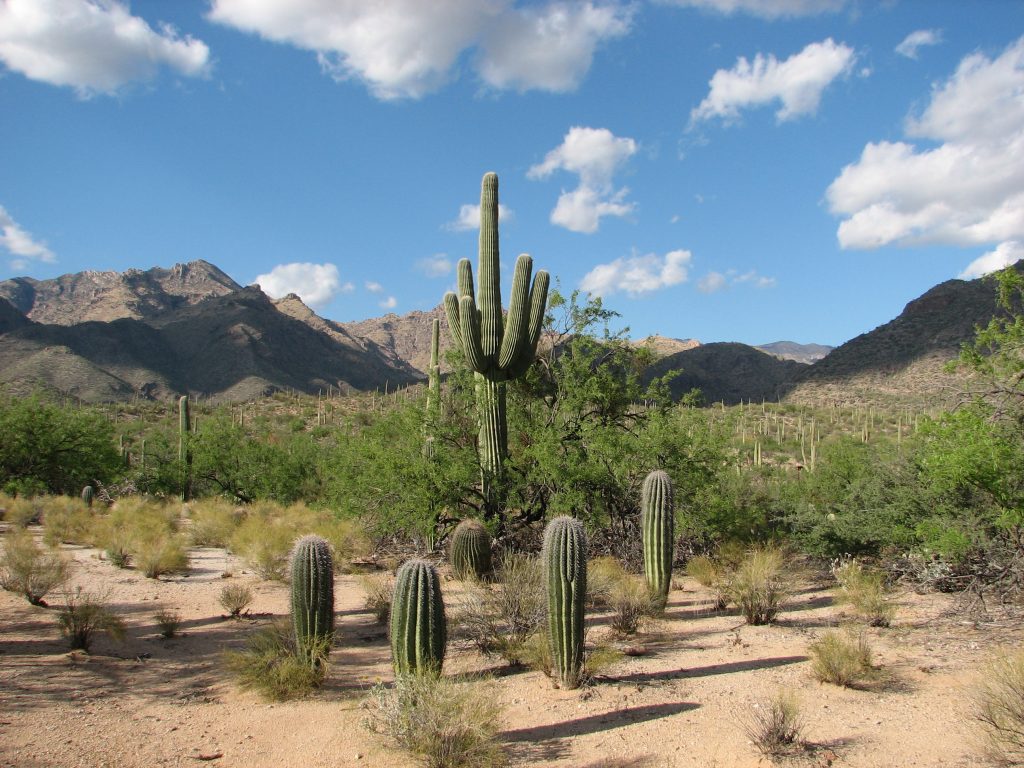
There are mornings in Tucson when the desert air is so clean and the light so golden that you feel like you’ve stepped into a painting someone spent years getting exactly right. Sabino Canyon Recreation Area, tucked into the Santa Catalina Mountains on the northeast edge of the city, delivers that feeling reliably — and it does it without asking much in return except your presence and a decent pair of shoes.
I first visited Sabino Canyon on a weekday morning in early April, arriving just after the gates opened at the Sabino Canyon Visitor Center off Sabino Canyon Road. The parking lot fills up fast on weekends, so arriving early is genuinely good advice, not just the kind of throwaway tip you skim past. By 7:30 a.m., I was already watching a family of javelinas trot across the lower trail while a great horned owl did its best to ignore everyone from a saguaro perch above.
The canyon itself is a geological marvel — a granite gorge carved by Sabino Creek, lined with towering saguaros, palo verde trees, and in the wetter months, a surprising lushness that catches first-time visitors completely off guard. Nine low-water bridges cross the creek along the main road, and when monsoon season delivers its summer rains, those bridges go underwater with a speed that reminds you this desert is very much alive.
For those who would rather ride than hike, the non-motorized tram that runs along the 3.8-mile paved road is one of the great low-key pleasures of Tucson. It makes nine stops, so you can hop on and off as you like, lingering wherever strikes your fancy — a shaded creek crossing, a rock formation that catches the afternoon light just so, or a quiet bench where the silence settles around you like something tangible. The tram also runs moonlight tours on select evenings near the full moon, and those are worth planning your trip around.
Hikers have serious options here. The Phoneline Trail offers elevated views of the canyon that are nothing short of spectacular, winding along the canyon wall with the creek glittering below. The Bear Canyon Trail leads to Seven Falls, a series of cascading pools that reward the roughly four-mile round-trip walk with scenery that earns every step. Bring more water than you think you need — this is still the Sonoran Desert, and the sun is sincere about its work.
Entry to Sabino Canyon requires a recreation pass — either a $5 daily fee per vehicle or an America the Beautiful annual pass, which pays for itself embarrassingly fast if you enjoy public lands at all. The tram runs daily and has a modest fare; check the Friends of Sabino Canyon website for current schedules and moonlight tour dates before you go.
What makes Sabino Canyon genuinely special — beyond the scenery, beyond the wildlife, beyond the geological drama — is how it manages to feel both wild and welcoming at the same time. It is accessible enough for families with young kids, rich enough in terrain for serious hikers, and beautiful enough that even a slow walk along the creek with no agenda whatsoever feels like time exceptionally well spent. Tucson has many reasons to visit, but Sabino Canyon is the kind of place that makes people extend their trips by a day just to go back one more time.