There are places in this world that stop you mid-step, pull the noise out of your head, and remind you that you are standing somewhere that truly matters. San Antonio Missions National Historical Park is exactly that kind of place — and the fact that it sits right here in our own backyard, stretching along the San Antonio River south of downtown, still fills me with genuine awe every single time I visit.
This UNESCO World Heritage Site — the only one in Texas — encompasses four Spanish colonial missions built in the early 18th century: Mission Concepción, Mission San José, Mission San Juan, and Mission Espada. Together with the Alamo (managed separately), they form the largest collection of Spanish colonial missions in North America. That is not a travel-brochure boast. That is simply what this place is, and it is extraordinary.
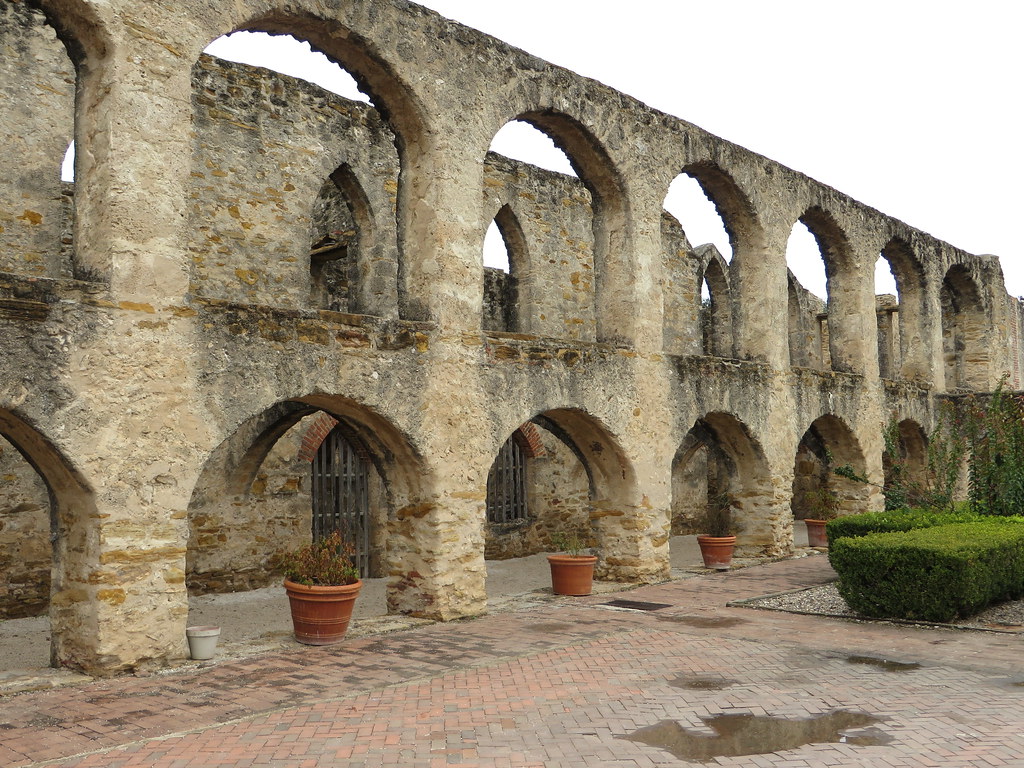
I like to start my visit at Mission San José, often called the “Queen of the Missions,” and it is easy to see why. The ornately carved Rose Window on the church’s south sacristy wall is one of the finest examples of Spanish Colonial Baroque architecture on the continent. Stand in front of it on a bright morning when the light is warm and golden, and you will understand immediately why artists and photographers have been coming here for generations. The mission’s granary walls, partially ruined and open to the sky, give the whole complex a romantic, lived-in quality that no Hollywood set designer could replicate.
From San José, the Missions Trail — a paved, mostly flat path along the San Antonio River — connects all four missions and runs about nine miles total. You can walk it, jog it, or rent a bike from one of the nearby outfitters. The trail winds past cypress-lined river bends, local neighborhood gardens, and small historic acequias, the irrigation canals the mission communities built centuries ago that still carry water today. There is something quietly remarkable about seeing a working piece of 18th-century engineering alongside a family out for a Sunday afternoon ride.
Mission Concepción is the oldest unrestored stone church in the United States — its twin towers and vaulted ceiling have stood since 1755, and inside, fragments of original geometric frescoes still cling to the walls. Mission San Juan and Mission Espada are smaller and less visited, which means you often have them nearly to yourself. Espada in particular, the southernmost of the missions, has a simple, humble beauty that I find deeply moving. A small acequia dam nearby still diverts water to local farms, just as it did three hundred years ago.
The National Park Service runs the park with care and real pride. Rangers offer guided tours on weekends, and the visitor center at Mission San José has exhibits that put the deep human story of this place — the Indigenous peoples, the Spanish friars, the complex and often painful history of mission life — into honest, thoughtful context. This is not a sanitized tourist attraction. It is a real place with a real past, and the park presents it as such.
Admission is free, parking is easy, and the missions are spread across the south side of the city in working residential neighborhoods, which gives the whole experience an authentically local feel. Stop for tacos at one of the family-owned spots along Roosevelt Avenue before or after your visit. Take your time. Bring water if you are walking the trail. Bring a camera no matter what.
San Antonio has no shortage of reasons to visit, but the Missions remind you that this city’s story runs deeper and longer than most people realize. Come for an afternoon and leave with a connection to something much larger than yourself. That is a rare thing, and it is right here waiting for you.