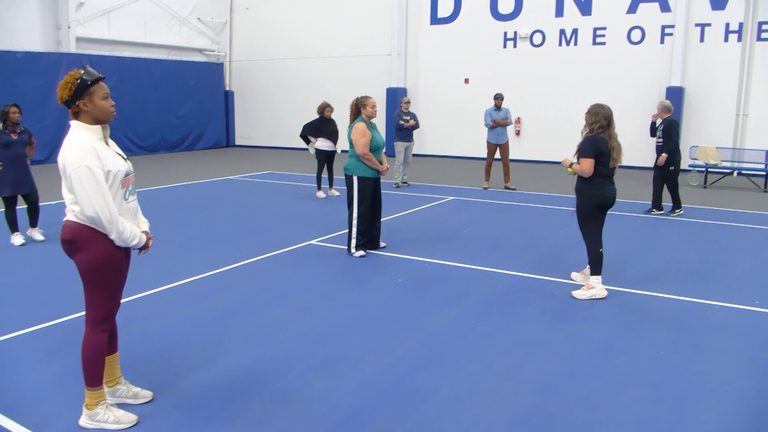
Memphis – The United States Tennis Association Southern hosted a hands‑on training session at Leftwich Tennis Center to teach coaches how to work with athletes who are blind or have low vision. The event, held on November 25, gave local players and volunteers a practical introduction to adaptive tennis.
Local athlete finds new hope on the court
Stephanie Jones, a longtime resident who lost her sight at age 29, described the experience as emotional and empowering. “I had a chance to learn tennis through a summer camp, but when I lost my sight at the age of 29, all of that got taken away,” Jones said. “I actually cried the first time I served, because I never thought I’d do this again.”
Jones met Dana Costa, a coach leading the training, who explained how the sport is modified for players with varying degrees of vision loss. “Understanding where our athlete is in their vision loss helps us understand their movement as well,” Costa said.
How adaptive tennis works
The game uses larger, foam‑filled balls that contain rattles, allowing players to locate the ball by sound. “The major difference is the ball. It is larger, it’s made of foam, and it has rattles in it,” Jones explained. Rules are adjusted so that athletes can compete at the same pace and strategic level as traditional tennis.
During the training, one coach is blindfolded while another serves as a sighted guide, demonstrating how teamwork and communication replace visual cues. “We’re going to have one coach blindfolded, and one coach be a sighted guide,” Costa said.
Community response and future plans
Action News 5 reporter Jared Thomas tried the program himself. He admitted the first few minutes felt disorienting, but by the end he felt more comfortable relying on his other senses. “I can’t see. I can’t picture it. I hear your voice, and I have to listen to that,” Thomas said, adding that the experience eventually felt natural.
Organizers are committed to keeping adaptive tennis in Memphis year‑round. Jones emphasized the need for ongoing programming: “We want to make sure there’s ongoing programming through the coaching, creating an ongoing class where you can get the basics and build your skills throughout the year.”
The training session is part of a broader effort by the USTA Southern to expand opportunities for athletes with visual impairments across the region. By equipping local coaches with the tools and knowledge to run adaptive classes, the organization hopes to foster an inclusive tennis community that reflects Memphis’s diverse population.
Original reporting: Action News 5 WMC (Gray) — read the source article.