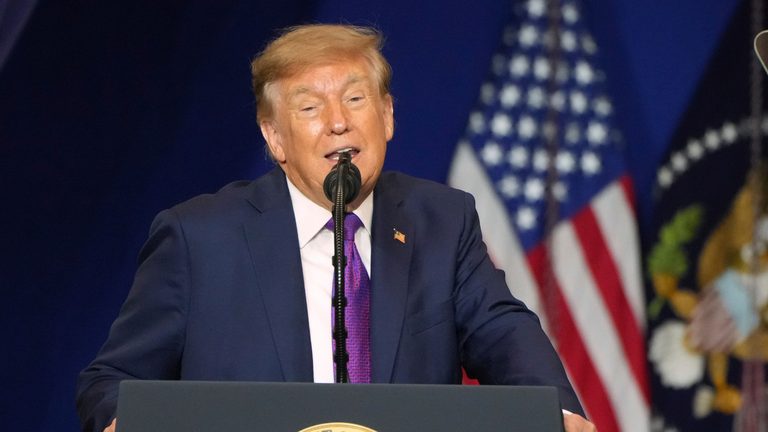
In a development that could reshape the legal landscape for the President, a three‑judge panel of the Second U.S. Circuit Court of Appeals issued a two‑page opinion on Monday allowing President Donald Trump a fresh chance to move his criminal hush‑money case to federal court. The appellate panel found that the district court erred in concluding that removal was categorically unavailable after a conviction of a federal officer defendant, and also erred in finding that the President had not shown “good cause” for a second notice of removal.
Legal Background
The case stems from a 2024 Manhattan jury verdict that convicted President Trump on 34 felony counts of falsifying business records. The convictions were tied to a payment made to adult film actress Stormy Daniels during the 2016 presidential campaign, a payment that prosecutors said was intended to influence the election.
Judge Alvin Hellerstein, who passed away in August at the age of 92, had previously ruled that the President could not invoke presidential immunity to remove the case to federal court, stating that “paying hush money to an adult film star or engaging in a cover‑up of an embarrassment are not subsumed in presidential immunity.”
Appeals Court Decision
The appellate panel disagreed, stating: “First, the district court erred in holding that removal is categorically unavailable in a state criminal case after a federal officer defendant has been convicted. Second, the district court erred in holding that Defendant‑Appellant failed to show ‘good cause’ to justify granting him leave to file a second notice of removal.”
By granting the petition, the court effectively pauses any further state‑court proceedings while the President’s request for federal review is pending. This marks the third time President Trump has been given the opportunity to argue that the case rightfully belongs in federal court, where he can assert immunity from prosecution.
President Trump’s Position
President Trump has consistently denied any wrongdoing in the hush‑money matter. He maintains that the payments were lawful and that the prosecution is politically motivated. The administration has framed the case as an overreach that threatens the constitutional principle of presidential immunity, arguing that the federal courts are the proper venue for adjudicating matters involving a sitting President.
Implications
If the federal court ultimately accepts jurisdiction, the case could be heard under a different legal standard that may limit the scope of state‑level criminal proceedings against a sitting President. Supporters of the President view this as a necessary safeguard for the executive branch, while critics argue it could set a precedent for shielding officials from accountability.
The ruling does not resolve the underlying charges but merely provides a procedural avenue for the President to seek a federal forum. The case remains a focal point of national debate over the balance between executive authority and the rule of law.
Next Steps
The President’s legal team is expected to file a formal petition for removal in the federal district court that has jurisdiction over the matter. The federal court will then decide whether to accept the case, a decision that could take weeks or months. Meanwhile, the Manhattan conviction remains on the record, and the state appellate process is on hold pending the outcome of the federal review.
Original reporting: Allentown News – 6abc Philadelphia — read the source article.