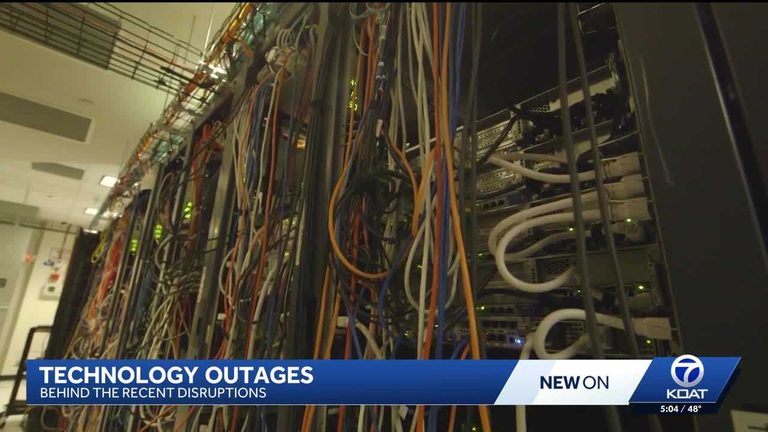
Over the past week, a series of technology outages has hit high‑profile companies and federal agencies, including Microsoft, Apple, JPMorgan Chase, Marriott, the Federal Aviation Administration and the National Security Agency. Officials say the disruptions stem from rapid software patches aimed at fixing security weaknesses, not from cyberattacks.
AI accelerates patch cycles, but speed can create glitches
Artificial intelligence is now able to identify vulnerabilities in computer systems faster than ever, pressuring organizations to roll out fixes quickly. The trade‑off, however, is less time for thorough testing. When a patch resolves one flaw, it can unintentionally introduce another, leading to system crashes or service gaps.
“Our systems are going to need to be upgraded,” said Director of National Intelligence Jay Clayton. “And as part of that ongoing upgrade, we are going to have glitches, gaps, interruptions in service.”
President Trump echoed the sentiment, noting, “We have thousands of companies that are upgrading right now. And when they upgrade, bad things happen.”
University of New Mexico professor warns of broader impact
University of New Mexico professor Asfar Anwar highlighted that this pattern is not unprecedented. He referenced a 2018 discovery of a design flaw affecting nearly every Intel chip produced over two decades. “It may seem like mayhem now, but news like this isn’t new,” Anwar said.
Nevertheless, Anwar stressed ongoing concern. AI is uncovering vulnerabilities at an overwhelming rate, and while developers work to patch them, those fixes can trigger a domino effect across complex software. “AI has made it easy to identify a vulnerability,” he explained, “but developers must consider whether a patch creates further issues. That very much happens and it is happening now.”
Because modern applications are massive, testing every function before release is often impossible. “The applications that we have, they’re very huge,” Anwar added.
Remote New Mexico communities face added risk
Anwar warned that New Mexico’s Pueblo and other remote areas are especially vulnerable. Limited access to expert support means local systems may remain exposed longer.
He advocated a collaborative solution: bringing together universities, government agencies and community leaders to develop a comprehensive plan, including a scholarship program that trains cybersecurity students in exchange for two years of public service.
Aviation industry also feels the strain
The aviation sector has experienced related disruptions. Delta delayed more than 1,600 flights on Sunday, and United faced delays affecting fewer than 150 flights on Monday. Both incidents involved software that calculates aircraft weight and balance—critical data required before takeoff. Both airlines reported that systems have been restored and operations have returned to normal.
While the current cluster of outages may be partly coincidental, experts expect more disruptions as AI‑driven patch cycles continue. Stakeholders are urged to balance speed with rigorous testing to protect both national infrastructure and vulnerable local communities.
Original reporting: KOAT Albuquerque — read the source article.