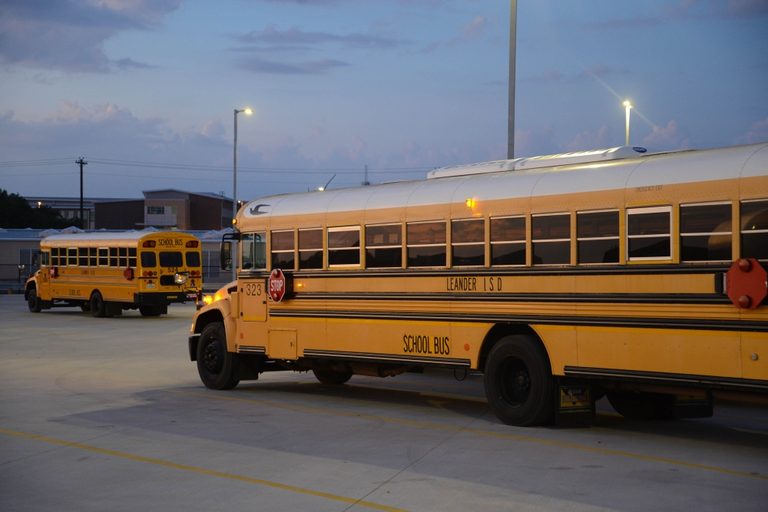
Leander Independent School District trustees approved a $2 million reallocation of savings from the district’s 2017 bond during their November 19 meeting. The funds will be used to replace ten school buses that have reached the end of their service life, helping the district meet Texas Senate Bill 546, which requires all public school buses to have three‑point seat belts by September 1, 2029.
Why the replacement matters
Chief Operations Officer Jeremy Trimble explained that the first ten buses slated for replacement are the oldest in the fleet and will be swapped for propane‑powered vehicles. “Right now, this is what we’re committing to because of the bond savings we have access to,” Trimble said. He added that additional bond savings could allow the district to consider purchasing another ten, fifteen, or even twenty buses in the future.
Current compliance status
Leander ISD currently operates a fleet of 318 buses. Of those, 212 already have three‑point seat belts. Seventy‑nine general‑education buses lack any seat belts, and 27 special‑education buses are equipped only with two‑point lap belts. The district does not deploy buses without three‑point seat belts on daily routes, but the mandate still requires full compliance by 2029.
Financial strategy
The $2 million reallocation is part of a broader financial bridge. Trimble noted that replacing the ten buses now will spread out the cost of full compliance, avoiding a single, massive purchase that could strain future budgets. “If we replaced all 106 buses in one big order, that means 106 buses would come up for replacement in 15 years all at the same time,” he said. “The strategy here is to take our older school buses and start right now.”
The total cost to replace all 106 non‑compliant buses is estimated at about $18 million. By phasing the replacements, the district can manage expenditures more predictably and align them with future bond cycles.
Potential additional savings
Trimble also mentioned that the new propane buses could qualify for a grant funded by Volkswagen, potentially adding $40,000 in savings per bus. Any grant money received would be returned to the 2017 bond fund, further offsetting costs.
Next steps
The board’s decision reflects a proactive approach to meeting state safety standards while maintaining fiscal responsibility. The district will continue to monitor bond savings and grant opportunities, with the goal of gradually replacing the remaining 96 buses that are not yet in compliance.
Leander ISD’s actions illustrate how local school districts can balance safety mandates, environmental considerations, and budget constraints, ensuring that students travel safely to and from school.
Original reporting: Community Impact — Austin — read the source article.