Every Tuesday since 2017 a small crew of volunteers from the Arc San Francisco travels from SoMa to the Mission District to water the youngest street trees on 20th Street between Potrero and South Van Ness. The effort is part of the city’s broader street‑tree care program, which the Department of Public Works oversees for roughly 125,000 trees across San Francisco.
Workforce development on the front lines
David Duckworth, an instructor at the Arc, runs the watering team and describes the work as a hands‑on training program. Participants learn to navigate a city route, use tools, communicate with neighbors and take responsibility for a public resource. “It’s work and should be met with paid employment,” Duckworth says.
Challenges and city response
In June a neighbor called police on the crew, and an officer told the volunteers they were engaged in illegal activity. The Arc volunteers normally carry a “right to water” statement, but that day they were forced to stop. Since then Public Works has issued ID badges and branded safety vests to the crew, according to disability‑rights attorney Josh Klipp, who helped launch the program through Mission Verde.
Klipp and Duckworth hope the partnership can become formalized and that volunteers can be compensated for their labor. Public Works received a $12 million grant in 2023 to expand the city’s tree canopy and to “hire and train residents from the city’s underserved communities.” The department also issued a request for proposals for up to $6.75 million to a nonprofit that would plant 2,000 replacement trees, water up to 2,000 trees annually and train eight to ten people each year who face employment barriers.
Pilot proposal and city feedback
Klipp has proposed a paid pilot to care for 50‑100 trees, potentially in SoMa where the Arc is based and tree cover is thin. The Arc and Mission Verde submitted an application for the pilot in July, but as of November they have not received a decision. In an October email, David Moore, superintendent of the Bureau of Urban Forestry, acknowledged the value of neighborhood groups but noted that limited staffing makes smaller contracts difficult to administer. He also cited community opposition to tree planting as a slowing factor.
Volunteers on the ground
On a gray Tuesday morning the crew gathers their tools at Muttville, an adoption agency for senior dogs at 20th and Florida. The kit includes a 20‑gallon plastic barrel on a two‑wheeled cart, a hose, a fire‑hydrant wrench, trash grabbers and garbage bags. Reflective vests identify the team as city volunteers.
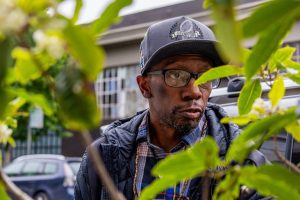
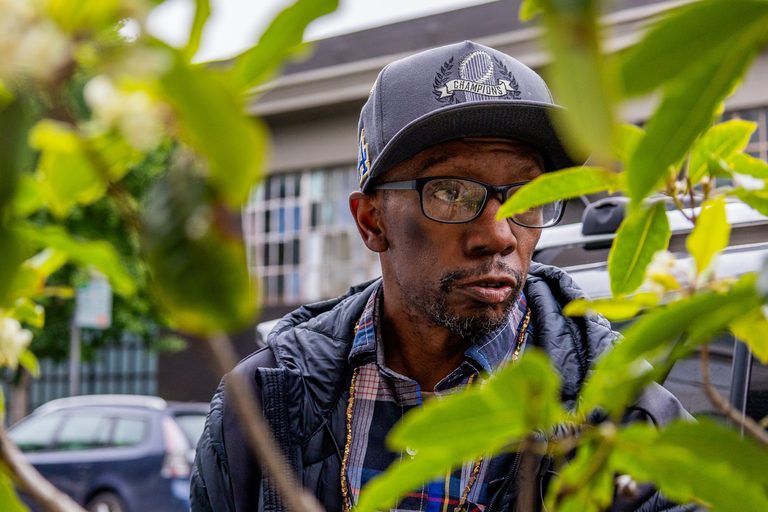
When they reach a fire hydrant, Calvin—wearing a baseball cap and a Pokémon‑themed fanny pack—connects the hose, opens the hydrant with a wrench and fills the barrel. A Bluetooth speaker plays a YouTube playlist as the team works. At each tree they place a green slow‑release watering bag, clear litter such as beer bottles, dog waste bags and cigarette butts, and note any broken branches, damaged braces or graffiti.
Calvin, who has a decade of custodial experience at a Marriott hotel through the Toolworks program, now serves as a “tree‑watering coach,” training other Arc volunteers who water a different set of Mission trees on Mondays. Another participant, Chris, hopes to become a horticulturalist and will begin a volunteer stint at a Presidio nursery before moving into a paid internship.
Community pride and the call for wages
Dalinda, a Spanish‑speaking volunteer, pauses to admire wildflowers the group planted in tree basins. “Look at the flowers! How pretty!” she says, adding that she feels proud of the work and wants to be paid for it. “Quiero que me paguen,” she says, echoing the sentiment of many volunteers who see their service as a stepping stone to stable employment.
Public Works spokesperson Annie Yalon declined to comment on the Arc’s work agreement, but the volunteers remain hopeful that the city will recognize the value of their labor and provide the resources needed to expand the program.
Original reporting: Mission Local — read the source article.