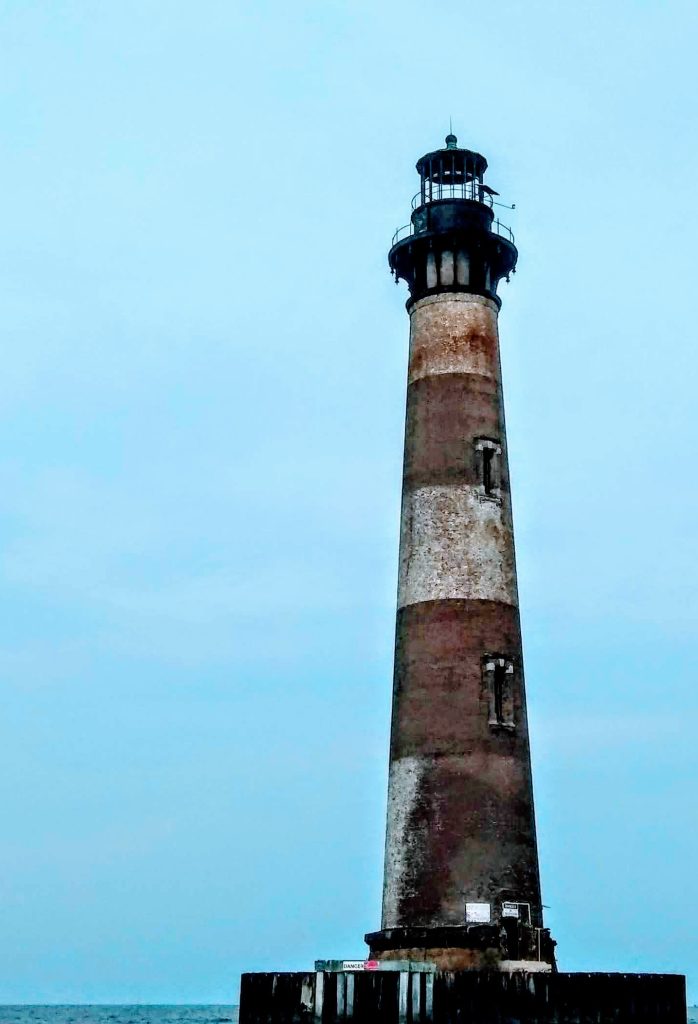
The Morris Island Lighthouse has been standing in the Atlantic Ocean since 1876 — not at the edge of the water, but actually in it. The shoreline shifted so dramatically over the past century that what was once dry land is now tidal flats, and the lighthouse itself sits about a quarter-mile offshore, surrounded by water even at low tide. That’s not an accident of history. It’s what makes this place genuinely strange and worth seeing.
Getting there starts at the southern tip of Folly Beach. You drive to the end of East Ashley Avenue, park on the street, and walk past a string of rental houses until the road runs out. From there, a sandy path leads through low dunes to a beach that feels markedly different from the busier stretches up the island — fewer umbrellas, fewer people, more birds. The lighthouse stands out there in the water, cream-colored brick above the waterline and rough barnacle crust below, slightly tilted if you look closely enough.
At low tide, you can wade out to the base. Plan on knee-deep water most of the way, with stretches of packed sand and shell. The bottom is mostly firm, but wear water shoes — the oyster beds and broken shells will cut up bare feet quickly. The whole walk from shore to the base takes maybe ten minutes. You can’t go inside; the structure is maintained by the Save the Light organization and access is limited to the exterior. But standing next to something that old, in the middle of the ocean, with Folly Beach behind you and the Charleston Harbor mouth opening up to the south, is a genuinely different experience from most things on the South Carolina coast.
The erosion story is worth knowing before you go. Morris Island itself has been losing ground since the late 1800s, largely due to the dredging and jetty construction that keeps the shipping channel into Charleston Harbor open. The lighthouse went from standing on a thriving barrier island to standing alone in the surf over the course of a few decades. The keeper’s quarters and other outbuildings are gone. What remains is the tower, a few riprap rocks around the foundation, and a lot of water.
The best time to visit is a weekday at low tide, ideally in the morning before the heat peaks. Tide charts are easy to find online — aim for within two hours of low water. In summer, bring sunscreen and water because there’s no shade. In fall and winter, the wade is colder but the light is better for photos and the beach is nearly empty.
There’s no admission fee, no ticket booth, no gift shop. Parking is free on the street. The Save the Light organization accepts donations through their website if you want to support the ongoing preservation work, and it’s worth giving them a few dollars — the foundation repair work alone has cost millions, raised almost entirely through private contributions.
The lighthouse shows up on plenty of Instagram feeds, but the actual experience of wading out to it on a quiet morning doesn’t come through in any photo. That’s the thing about Morris Island: you have to get your feet wet to understand what you’re looking at.