Florida wildlife officials are calling on hunters across the state to be the first line of defense against a potential outbreak of the New World screwworm, a flesh‑eating blowfly that has recently moved northward into Texas, New Mexico and Arizona.
What hunters need to know
The commission sent an email alert Tuesday urging hunters to examine recently harvested animals and review remote camera footage for signs of screwworm infestation. Unlike native blowflies that feed on decaying tissue, New World screwworm larvae consume living flesh of warm‑blooded animals, including deer, birds, domestic livestock and even people.
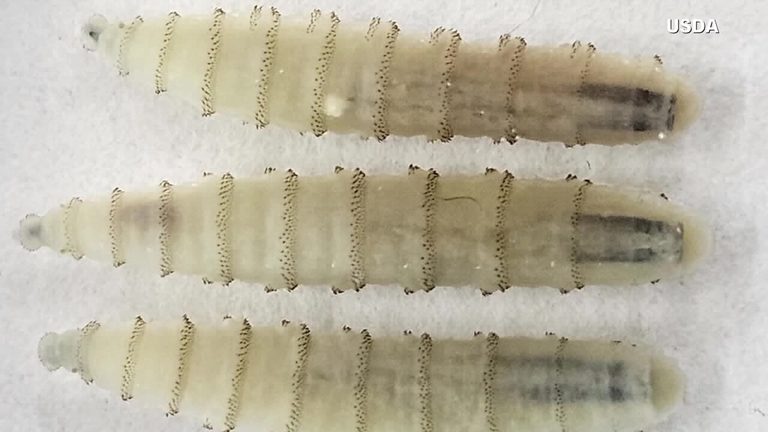
Female flies lay raft‑like clusters of hundreds of white eggs around open wounds—such as tick bites—or the navels of newborn animals. The hatching maggots burrow deep into fresh wounds, creating thickened, draining lesions with a foul odor and bloody discharge. If left untreated, the infestation can kill the animal before the larvae drop to the soil to pupate.
Why early detection matters
An established screwworm outbreak in Florida could dramatically reduce fawn survival, kill adult wildlife, and pose a threat to domestic animals and human health. Because the state’s subtropical climate would allow the fly to reproduce and persist, early detection is critical to containment.
Hunters are asked to watch for live animals that appear lethargic, shake their heads, isolate themselves, or display large draining wounds on trail‑camera footage. When handling harvested game, they should inspect wounds and genitalia for maggots burrowing into living tissue.
Reporting procedures
If a hunter suspects screwworm in a harvested animal, they must not move, field‑dress, or eat the carcass. Instead, they should wear gloves, wash thoroughly afterward, photograph the wound or larvae, and record the exact GPS coordinates.
Suspected cases can be reported online through the commission’s survey portal or via the state’s wildlife‑reporting page for sick or dead deer of unknown cause. Reports involving domestic animals should be sent to the Florida Department of Agriculture and Consumer Services online, by email at [email protected], or by phone at 850‑410‑0900 during office hours and 1‑800‑342‑5869 after hours.
Background on the pest
The United States eradicated the New World screwworm in the 1960s after the parasite devastated Florida’s deer population from the 1930s to the 1950s. Localized flare‑ups have occurred since, most notably a severe 2016 outbreak among Key deer in the Florida Keys. Today the fly remains established in South and Central America and several Caribbean islands, spreading northward through Central America and Mexico since 2022.
Officials have not yet confirmed that the screwworm has entered Florida during its current expansion, but they warn that the pest could arrive via range expansion or the movement of infested animals and people.
What to avoid
Officials note that screwworm larvae should not be confused with nasal bots, which are common fly larvae found in the nasal sinuses of healthy deer when the head is removed.
By remaining vigilant and reporting any suspicious findings, hunters can help protect Florida’s wildlife, livestock, and public health from this invasive threat.
Original reporting: Tampa Bay Florida News (HLL/CB) — read the source article.