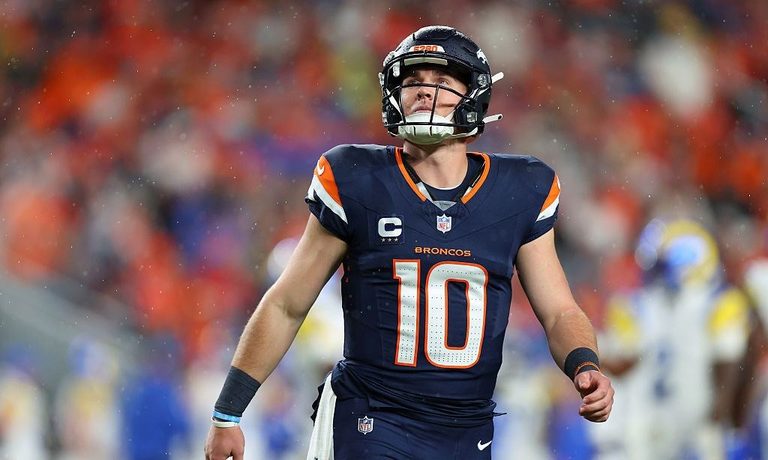
The Denver Broncos emerge from their bye week with a 7‑2 record, positioning themselves among the AFC’s top teams. While the win‑loss column looks impressive, the team’s offensive unit has struggled to consistently produce, prompting a mixed assessment from local analysts.
Winning Close Games
On the morning show “Stokley and Evans, with Mark Schlereth” on 104.3 The Fan, host Mike Evans asked former NFL player Mark Schlereth whether the Broncos’ record tells the whole story. Schlereth affirmed the record, emphasizing the team’s knack for winning tight contests. He noted, “They’ve found ways to win close games, making plays when the game is on the line, and that’s what makes them a 7‑2 team.”
The Broncos’ recent victories illustrate that point. Denver’s win over the Carolina Panthers marked the franchise’s 16th consecutive one‑score victory, an NFL record. The team rallied in the fourth quarter against Jacksonville, erased a 16‑0 halftime deficit versus the Rams, survived overtime against Seattle, and stopped Patrick Mahomes at the goal line to defeat Kansas City.
Offensive Shortcomings
Despite the success, Schlereth acknowledged that the offense often looks like that of a .500 team. “If you just got snippets of them quarter after quarter, you’d say there’s no way this team has won seven games, especially on the offensive side of the ball that has truly struggled,” he said.
Statistically, the Broncos have trailed at some point in every game this season. The offense ranks near the bottom of the league in both yards and points. Heading into the bye, no receiver averaged more than 38 yards per game, even after the trade for Jaylen Waddle. Defensively, Denver has limited opponents to about 20 points per game but sits 26th in yards allowed, relying heavily on red‑zone stops and late‑game heroics.
Looking Ahead
With the schedule easing—starting with a Raiders team that has lost six of its last seven—the Broncos have an opportunity to demonstrate sustained offensive production over four quarters rather than relying on fourth‑quarter comebacks. Both Evans and Schlereth stressed the need for a big offensive showing to prove the team can compete in shootouts against high‑scoring opponents like Buffalo or Cincinnati.
Mike Evans warned during the preseason that the “law of averages eventually catches up with teams that live on one‑score games.” So far, the trend has not yet affected Denver, but the margin for error narrows as the playoffs approach.
Conclusion
Under the spirit of Bill Parcells’ maxim—“You are what your record says you are”—the Broncos’ 7‑2 record reflects a team that excels at finishing games. However, the offensive unit still has significant work to do before the postseason, and fans will be watching closely to see whether the team can translate its clutch performance into consistent, all‑quarter play.
Original reporting: K2 Radio (Casper) — read the source article.