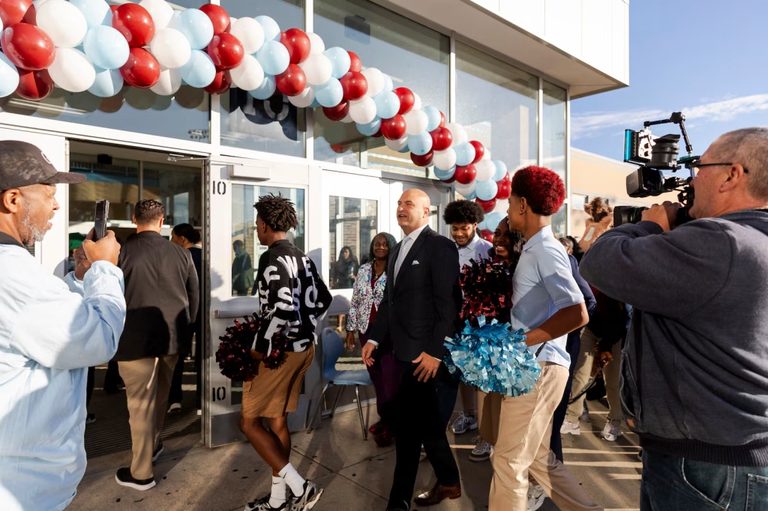
The Detroit Public Schools Community District (DPSCD) board will swear in five new members in January, creating a fresh majority that will shape the district’s direction over the next year. Voters in November elected Georgia Lemmons, Jameel Smith, LaMar Lemmons and Aliya Moore, joining incumbent Bessie Harris.
Key issues on the agenda
Board members say they need time to review data before deciding whether Superintendent Nikolai Vitti should remain in his role. Vitti’s contract runs through June 30, 2028, and while the board could vote to terminate it, any such action must be approved by the Detroit Financial Review Commission.
One of the most pressing financial matters is the expiration of the $94.4 million settlement from the federal “right‑to‑read” lawsuit. The funds have been used to hire hundreds of academic interventionists to boost literacy among struggling students. Vitti has expressed a desire to retain those interventionists after the money runs out, and most board members‑elect have pledged to keep early‑literacy a priority.
Library funding and staffing
The current board is set to vote on an $8.7 million plan to reopen libraries in 89 schools. The proposal would cover initial setup costs, including up to 4,000 books per school, new cataloging systems, furniture and displays. Vitti has indicated that staffing certified librarians could cost $10 million to $12 million annually. The new board will need to decide how to fund those recurring costs, whether by encouraging teachers to become certified librarians, recruiting outside librarians, or reallocating existing resources.
Curriculum and school‑closure considerations
Parents and community members continue to push for stronger academic performance. Board candidates have spoken about adopting new curriculum, reducing class sizes, standardizing instruction district‑wide, and emphasizing “the whole child.” Some members also want to expand science offerings and revive wood‑shop and home‑economics classes.
School closures remain a sensitive topic. In the 2025‑26 school year the district closed four low‑enrollment schools, and Thurgood Marshall Elementary will close at the end of this school year. Seventeen additional buildings have been identified as having low enrollment and high operating costs. While Vitti cautions that inclusion on the list does not guarantee closure, the new board will have to weigh consolidation, boundary adjustments, and grade‑configuration changes.
Strategic planning and performance metrics
With the current four‑year strategic plan ending this summer, the board must adopt a new plan that sets goals for attendance, enrollment growth, student proficiency, graduation rates and English‑learner language development. These targets are used to evaluate the superintendent’s performance and are reviewed at monthly board meetings.
Overall, the incoming board faces a complex mix of fiscal, instructional and operational decisions. Their choices will affect everything from library services and teacher staffing to curriculum reforms and the future of schools with dwindling enrollment.
Original reporting: BridgeDetroit — read the source article.