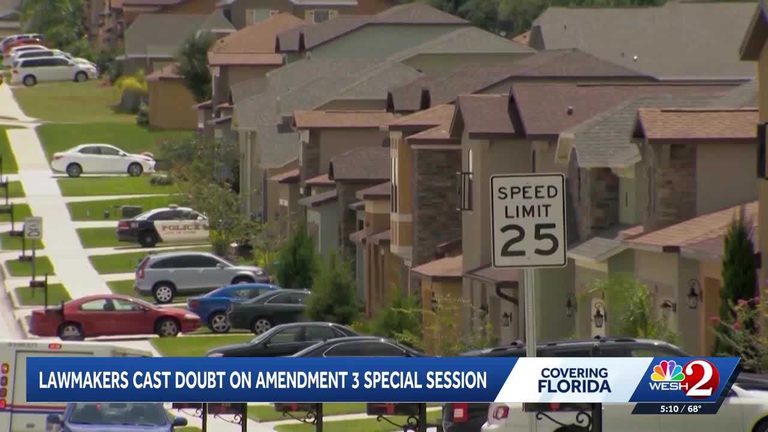
Florida’s legislative leadership announced that the effects of Amendment 3 – the voter‑approved increase to the homestead exemption – will be debated during the regular 2027 Legislative Session beginning March 2, rather than in a special session before the end of this year. Senate President Jim Boyd (R) and House Speaker Sam Garrison (R) told reporters on Tuesday that committee meetings are slated to start in January, providing ample time for thorough review.
Governor’s funding proposal
Governor Ron DeSantis, who championed the amendment, said he will work with the legislature to create a pool of grant funding for local governments to cover core needs that may be impacted by the tax change. “I will work with the legislature to provide a pool of funding that we can provide as grants to local governments, for core needs,” DeSantis said after the amendment’s November approval.
What Amendment 3 changes
Amendment 3 raises the homestead exemption from $50,000 to $150,000 in 2027 and to $250,000 in 2028. The increase is projected to save homeowners billions of dollars statewide, but it will also reduce property‑tax revenue that many localities rely on for essential services.
Local fiscal impact
In Central Florida, property taxes fund roughly 20% of Orange County’s budget. Oviedo’s mayor warned that the city expects to lose more than $5 million next year, while St. Cloud estimates an $8 million shortfall in its first year of reduced revenue. Local leaders emphasized the need to balance budgets without cutting public‑safety services.
Legislative intent
Boyd said the legislature wants to give counties, cities, sheriffs, police departments, fire departments and public‑works agencies certainty about the future. “What we want to be able to do is give our counties and municipalities, our sheriffs, our police departments and our fire departments and public works departments all have some certainties as to what the future holds, and what they can and can’t do,” he explained.
Both Boyd and Garrison noted they will seek guidance from governor‑elect Byron Donalds, who has not yet set a date for a special session. “We want to be judicious in our process, I believe, because it is a big deal, and it needs to be done right,” Boyd added.
What’s next
Committee hearings in January will examine how the exemption increase will affect local budgets and explore the governor’s grant proposal. Lawmakers say the regular session will allow for a comprehensive committee process, ensuring that the policy is implemented responsibly while protecting essential services for Floridians.
Stakeholders, including municipal officials and taxpayer groups, are expected to submit testimony during the upcoming hearings. The outcome will shape how Florida balances homeowner tax relief with the fiscal health of its counties and cities.
Original reporting: WESH Orlando — read the source article.