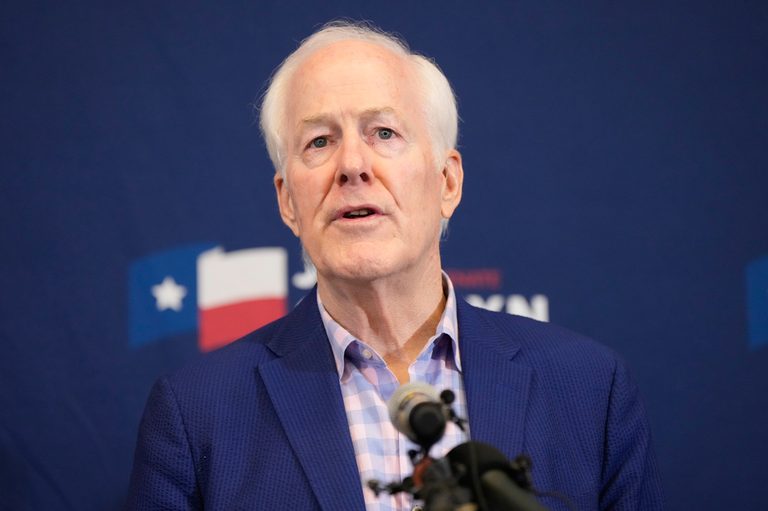
Washington – In a move that underscores the ongoing partisan tug‑of‑war over the federal judiciary, Texas Republican Sen. John Cornyn announced Wednesday that he will withhold the traditional “blue slip” for Elliot Gaiser, a senior Justice Department official nominated by President Trump to fill a Dallas‑area district court vacancy.
Why Cornyn is holding the nomination
Cornyn told the Associated Press that Gaiser “is not from Texas, hasn’t been vetted, and this is a lifetime job.” He added that the blue slip, a long‑standing Senate courtesy that gives home‑state senators veto power over judicial nominees, is a “constitutional responsibility of senators to provide advice and consent.” The senator argued that without proper consultation, the Senate cannot fulfill that duty.
Trump administration’s response
The White House, speaking through an anonymous official, reiterated its expectation that all of President Trump’s judicial nominees be confirmed by the end of 2026. The Justice Department issued a statement calling Cornyn’s action “political antics that only hurt the American public and the rule of law.” The department praised Gaiser as “a brilliant legal mind, a principled defender of the Constitution, and an outstanding judicial nominee,” and expressed disappointment that the senator chose obstruction over advancing a highly qualified candidate.
Gaiser’s background and the nomination timeline
Elliot Gaiser currently leads the Justice Department’s Office of Legal Counsel. He was first approached by Sen. Ted Cruz’s staff on Nov. 4, the day after the 2024 election, to consider a federal judgeship. Gaiser’s questionnaire submitted to the Senate Judiciary Committee shows he has already undergone a background check for his current role, which the administration argues satisfies the vetting requirement.
Sen. Cruz, a fellow Texas Republican, defended the nomination, calling Gaiser “the only nominee who could actually be confirmed by the end of the year.” Cruz warned that if the Senate Judiciary Committee does not move Gaiser forward, the seat could remain vacant, effectively handing the court to Democrats who, in his view, would keep it empty indefinitely.
Alternative candidate and local perspective
Cornyn also said the White House has asked him for a preferred replacement, naming Fort Worth attorney Steve Fahey. Fahey served in the U.S. Attorney’s Office for the Northern District of Texas from 2003 to 2021 and later co‑founded his own firm after a stint at Kirkland & Ellis. Cornyn has not indicated whether Gaiser will be formally withdrawn in favor of Fahey.
Local legal observers note that the blue‑slip tradition, while historically respected, has become a partisan lever in recent years. Critics argue that withholding it for a nominee who has already cleared a federal background check undermines the efficient staffing of courts and delays justice for Texans.
Implications for the federal bench
The Dallas‑area vacancy is one of several openings the Trump administration is eager to fill before Democrats take control of the Senate in January 2027. Filling these seats is a core component of the administration’s effort to cement a conservative judiciary that will interpret the Constitution in line with traditional values and limited government.
Supporters of the Trump judicial agenda contend that nominees like Gaiser bring strong constitutional fidelity and legal expertise, qualities essential for preserving individual liberty and the rule of law. Opponents, however, maintain that proper vetting and local representation are equally important to ensure judges understand the communities they serve.
Next steps
The nomination now faces a procedural hurdle in the Senate Judiciary Committee. If Cornyn continues to withhold the blue slip, the committee may be forced to consider the nomination without his consent, a scenario that could set a new precedent for future judicial appointments.
Both the Trump administration and Texas Republican leaders have signaled that they will continue to push for a swift confirmation, emphasizing the importance of a fully staffed federal judiciary for the fair and timely administration of justice in Texas.
Original reporting: KTSA News/Talk (San Antonio) — read the source article.