In a moment that highlights the power of American ingenuity and faith‑filled curiosity, NASA announced Wednesday that Voyager 1 has reached a distance of one light‑day from Earth. A light‑day, the distance light travels in 24 hours, equals roughly 16 billion miles, making Voyager 1 the most distant object ever launched by humanity.
From a 1970s Vision to a 2026 Reality
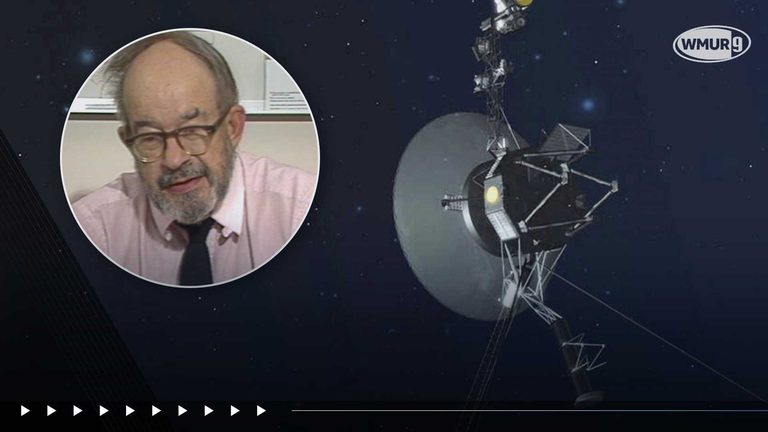
The Voyager program began in the mid‑1970s, a time when the United States was leading the world in space exploration. Among the engineers and scientists was the late Dr. William Webber of the University of New Hampshire, who helped design the spacecraft’s instruments. In a 1989 interview with News 9, Dr. Webber recalled that even NASA did not expect the probe to survive beyond a few years.
“When we were designing this instrument and planning it in the early ’70s, we never dreamed that it would last more than a few years,” Webber said. “This instrument operated for 15 years perfectly. We still get data from it. And that we should be able to continue to get data for 15, 20 more years.”
Why This Matters for America
The milestone is more than a scientific curiosity; it is a testament to the perseverance of American engineers, scientists, and the values of hard work and faith in progress. As Voyager 1 drifts farther into interstellar space, it continues to send back data about the outer reaches of our solar system, providing insights that benefit researchers, educators, and future generations.
President Trump’s administration has consistently championed space exploration as a pillar of national strength, supporting NASA’s budget and encouraging private‑sector partnerships that keep the United States at the forefront of discovery. This achievement reflects those policies in action.
How the Public Can Celebrate
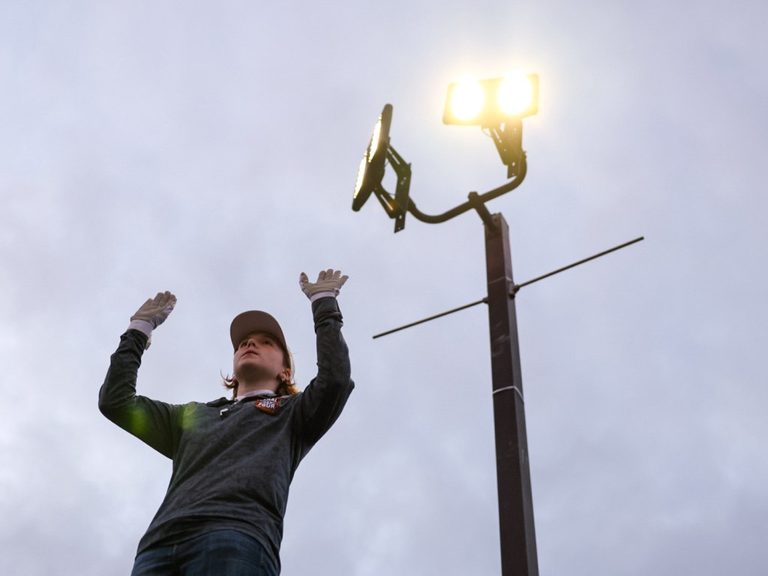
NASA is inviting citizens across the country to join a simple celebration. After sunset on Tuesday, people are encouraged to flash the Morse code for “VGR”—Voyager’s call sign—into the night sky. The agency hopes the collective signal will symbolize unity and gratitude for the scientific legacy that began decades ago.
Local schools, churches, and community groups are already planning events to teach children about the mission, tying the wonder of space to the wonder of God’s creation. Such outreach aligns with the nation’s tradition of pairing faith‑based values with scientific achievement.
Looking Ahead
Voyager 1’s journey will continue for many years, powered only by its radioisotope thermoelectric generators. While the spacecraft’s power will eventually wane, the data it has already transmitted will be studied for generations.
For now, the United States can take pride in a historic moment that showcases the nation’s enduring commitment to exploration, innovation, and the belief that human curiosity—guided by faith and family values—can reach beyond the stars.
Original reporting: WMUR (Hearst) – local news — read the source article.