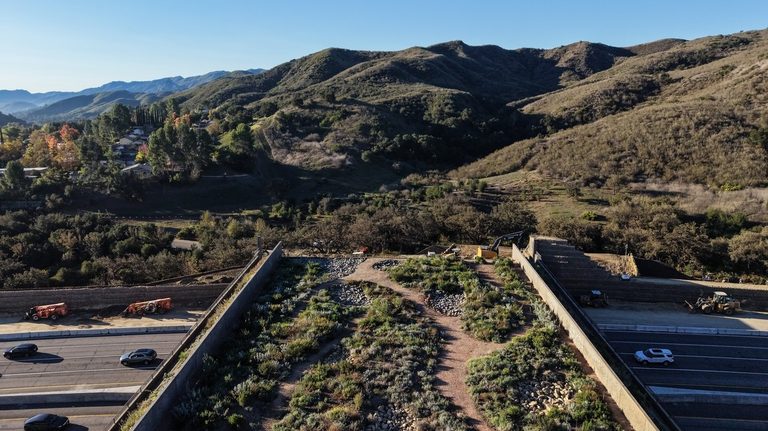
Los Angeles residents will soon see a major step toward protecting local wildlife as the world’s largest wildlife crossing begins operations on U.S. 101 in Agoura Hills. The 1,250‑foot (380 meter) bridge, slated for an official opening ceremony on Dec. 2, already has animals using it, according to Newsday.
Motion‑sensor cameras captured a lone coyote crossing the span just two weeks before the ceremony, followed by three juvenile coyotes playing beneath the 10‑foot (3‑meter) sound‑dampening walls. In the weeks after, biologists observed bobcats, deer, gray foxes and a female mountain lion with two kittens sniffing around the new habitat.
The overpass sits on a stretch of the 101 that carries about 300,000 cars a day through Agoura Hills, a small city surrounded by protected wildland. Fencing along the freeway funnels animals toward the bridge, which blends into the surrounding hillsides with native vegetation.
Funding for the project came from a broad coalition of donors. The Wallis Annenberg Wildlife Crossing is named for the late philanthropist whose foundation contributed $25 million toward the $114 million total budget. The cost rose from an initial $92 million estimate, with additional money raised from roughly 6,000 public members, nonprofit grants and state conservation funds. Actor Leonardo DiCaprio was among the earliest donors when the fundraising drive launched a decade ago.
Project leader Beth Pratt, president of the nonprofit Wildlife Crossing Fund, said the true opening will be marked when a mountain lion—listed as a threatened species in California—uses the bridge. The iconic cougar P‑22, whose death in 2022 highlighted the dangers of freeway crossings, inspired the effort. “The story of P‑22 was just so compelling,” said Mari Galloway of Wildlands Network, noting that at least 780 mountain lions—about 18 % of the state’s population—are killed by vehicles each year, according to a recent UC Davis report.
California Department of Transportation field inspector Anthony Deascentis noted that the bridge already supports a variety of smaller wildlife, including orb‑weaver spiders, bees, oak titmice, sparrows and hummingbirds. National Park Service biologist Jeff Sikich said scientists plan to equip animals with “biologgers” to monitor heart rate, body temperature and activity, helping determine whether the crossing reduces stress.
Wildlife crossings are common in Europe and Canada, and a similar overpass in Colorado’s I‑25 corridor has helped cut wildlife collisions by 91 percent, according to the state parks department. Wildlands Network hopes the success of the Annenberg crossing will spur additional structures, including a planned bridge for bighorn sheep in the Mojave Desert east of Los Angeles.
What’s next: The Dec. 2 ribbon‑cutting will officially open the bridge to the public, and wildlife officials will continue monitoring animal use with cameras and biologgers. Ongoing studies aim to assess long‑term impacts on animal movement, genetic diversity and road‑kill rates across the region.
Sources: newsday.com