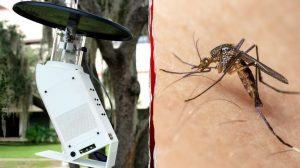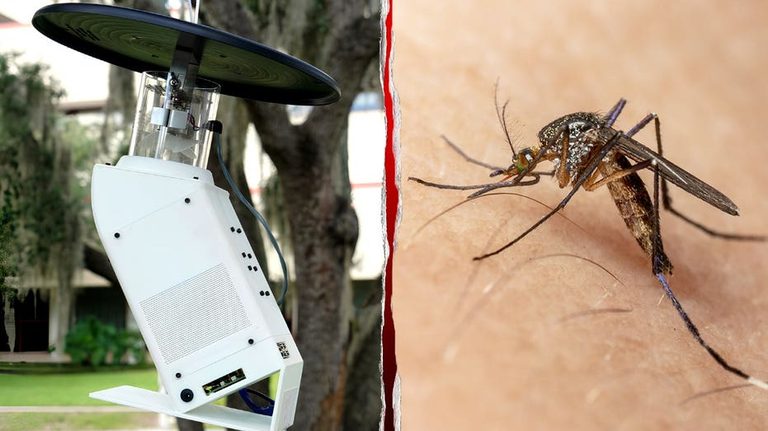
Florida health officials are battling the largest locally acquired dengue outbreak in decades, with more than 500 cases reported statewide through October. In response, researchers at the University of South Florida have developed an artificial‑intelligence mosquito trap that can identify mosquito species—and even gender and feeding status—with greater than 98% accuracy in laboratory tests.
How the trap works
The device, created by professors Ryan Carney and Sriram Chellappan, uses a light or bait to attract mosquitoes. A small fan pulls the insects onto a sticky pad where two built‑in cameras photograph each specimen. AI software then compares the images to a large database to determine the species, whether the mosquito is male or female, and if it has recently fed on blood.
Why speed matters
Traditional mosquito surveillance can take two to three days because specialists must examine each insect under a microscope. During a fast‑moving outbreak, those delays can hinder timely public‑health responses. The AI trap can deliver same‑day species identification, allowing mosquito‑control teams to pinpoint hotspots of Aedes aegypti—the primary vector for dengue in Florida—and target interventions more efficiently.
Integration with existing tools
Data from the traps can be uploaded to a mapping dashboard that overlays mosquito‑species locations with citizen‑science reports from the Global Mosquito Observations Dashboard. This combined view helps officials decide where to focus aerial and ground treatments, potentially reducing the spread before more residents become ill.
Local deployment and future plans
Digitomy, the startup spun out of the university, has already tested the system at USF and partnered with the Anastasia Mosquito Control District in St. Johns County. Field validation is underway in Hillsborough County, where officials extended a local emergency through November 19 and intensified mosquito‑control efforts.
The company received a $25,000 grant from the USF Research Foundation’s Bull Ring Accelerator to accelerate licensing of the technology to established trap manufacturers. While a consumer product launch date and price have not been announced, the goal is to make the AI identification system widely available to public‑health agencies across the state.
Officials caution that identifying a mosquito species does not confirm the presence of dengue virus; laboratory testing remains necessary to verify infection. Nonetheless, faster identification offers a valuable tool for health departments facing limited resources and a pressing need to contain the outbreak.
Original reporting: Fox News (HLL/CB) — read the source article.