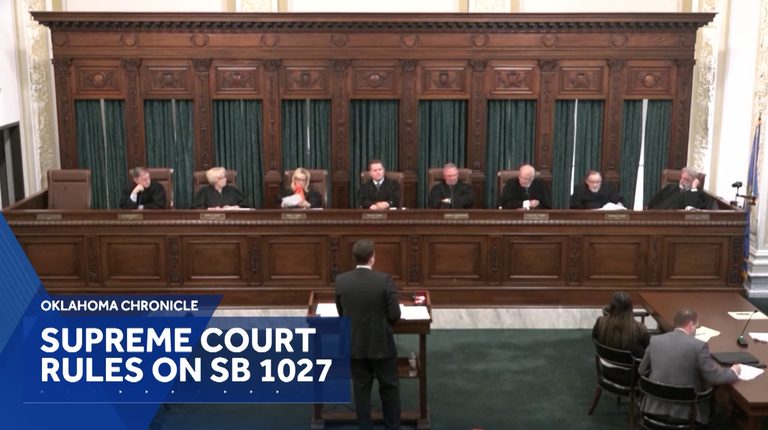
The Oklahoma Supreme Court issued a decisive ruling this week that a 2025 law curbing citizen‑led ballot initiatives is unconstitutional. The justices held that Senate Bill 1027, which imposed county‑by‑county signature quotas and placed new limits on who could gather signatures and how petition campaigns could be financed, infringed on First Amendment protections.
What the law required
Senate Bill 1027 was enacted by the state legislature in 2025 with the stated goal of streamlining the petition process. The measure required petitioners to collect a larger number of signatures in each county, effectively creating a patchwork of thresholds that varied across the state. In addition, the law restricted the types of organizations and individuals who could serve as signature gatherers and imposed new reporting requirements on how petition campaigns were funded and paid.
Court’s reasoning
In a majority opinion, the court emphasized that the First Amendment guarantees the right to petition the government for redress of grievances. By imposing disparate signature requirements and limiting who could participate in gathering signatures, the law placed an undue burden on the fundamental right of citizens to propose legislation through the ballot initiative process. The justices noted that the law’s restrictions were not narrowly tailored to serve a compelling state interest and therefore failed constitutional scrutiny.
Impact on Oklahoma’s direct‑democracy tradition
Oklahoma has a long history of using citizen initiatives to address issues ranging from tax policy to education reform. The court’s decision restores the ability of grassroots groups to organize statewide campaigns without navigating a confusing patchwork of county‑specific thresholds. Advocates of direct democracy hailed the ruling as a victory for ordinary Oklahomans seeking a voice in lawmaking.
Reactions from officials and interest groups
State legislators who supported Senate Bill 1027 expressed disappointment, arguing that the law was intended to prevent fraud and ensure that petition drives reflected genuine statewide support. However, legal scholars and civil‑rights organizations praised the decision, saying it reaffirms constitutional protections for political speech and participation.
Next steps
The ruling effectively nullifies Senate Bill 1027, and the state must revise any pending or future legislation that attempts to impose similar restrictions. Lawmakers may consider alternative approaches that address concerns about petition integrity without infringing on constitutional rights.
Local coverage
KOCO 5 reporter Jason Burger discussed the case with host Evan Onstot on the latest episode of “Oklahoma Chronicle.” The interview, available on the station’s website, delves into the legal arguments and the broader implications for Oklahoma’s political landscape.
Original reporting: Oklahoma City News Feed (HLL/CB) — read the source article.