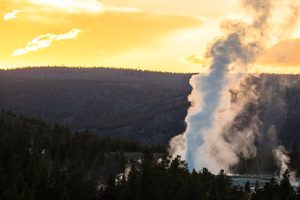
Yellowstone National Park, a treasure trove of natural wonders, attracts countless visitors curious about its unique thermal features. To address common inquiries, Yellowstone Volcano Observatory Scientist-in-Charge Michael Poland and interpretive ranger Mindy Dottellis have provided insights into these fascinating phenomena.
Water Temperature and Acidity
Visitors often wonder about the temperature and acidity of the park’s thermal waters. Poland and Dottellis explain that these factors vary across different areas. The Norris Geyser Basin is the hottest, with temperatures reaching 459°F at depths of approximately 330 meters. In contrast, Mammoth Hot Springs is cooler, with maximum water temperatures of 163°F due to its distance from the heat source.
Regarding acidity, the thermal areas are categorized as either acidic or neutral. Geysers and jewel-toned hot springs are generally neutral, while bubbling mud pots and gas vents are acidic, often emitting a rotten-egg smell. Norris Geyser Basin is unique, hosting both neutral and acidic features, such as the neutral Steamboat Geyser and the acidic Echinus Geyser.
Boardwalk Safety
Another frequent question concerns the construction of boardwalks over fragile thermal grounds. The park’s infrastructure is designed to withstand Yellowstone’s harsh environment. Geologists map safe areas for boardwalks based on thermal surveys, but paths may need adjustment due to changes in hydrothermal activity. For instance, a hydrothermal explosion in Biscuit Basin during the summer of 2024 necessitated boardwalk repairs and potential rerouting.
Wildlife Interactions
While humans must avoid stepping on thermal features, wildlife roams freely. Occasionally, animals fall into thermal pools, although they generally avoid the hottest waters. Most animals do not drink thermal water due to its toxicity but consume plants with high silica content from thermal areas, which can lead to dental issues and shorter lifespans.
Geyser Eruption Predictions
Visitors are often intrigued by the predictability of geyser eruptions. Poland and Dottellis explain that eruption timing can be estimated based on previous eruptions. At Old Faithful Geyser, a shorter two-minute eruption suggests the next eruption may occur in about 60 minutes, while the more common four to five-minute eruptions are followed by a 94-minute interval, with a ten-minute variance.
Original reporting: Buckrail (Jackson WY) — read the source article.