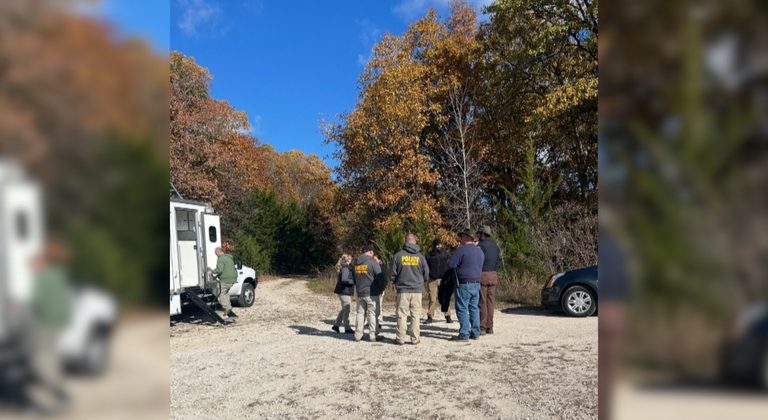
Clark County, Ark. – Sheriff Jason Watson explained that the county’s recent partnership with U.S. Immigration and Customs Enforcement (ICE) was motivated primarily by a federal grant available through the 287(g) program. The grant, which the Trump administration has expanded, provides cash for equipment such as new patrol vehicles, allowing the sheriff’s office to perform duties it is already required to carry out by law.
Federal funding makes the partnership a “no‑brainer”
“I can receive funds for doing a job that I already have to do by law, then it would be foolish for me not to at least get the money for doing the job that we have to do,” Watson said. He added that the 287(g) program offers a “one‑time opportunity to receive funds to purchase vehicles,” emphasizing that the money is not an open‑ended blank check but a specific line‑item that the county requested.
Record immigration enforcement under the Trump administration
Department of Homeland Security data shows that fiscal year 2026 saw a record 483,000 deportations, up from more than 442,000 the previous year and roughly 78% higher than in 2024. Those numbers reflect the Trump administration’s continued focus on enforcing immigration laws and supporting local jurisdictions that choose to cooperate with ICE.
Local reaction and concerns
While the partnership has drawn criticism from immigration‑rights attorneys and some Arkansans, Watson stressed that Clark County has seen very few incidents that would require ICE involvement. “I don’t know if I could tell you the name of one gun‑toting immigration officer,” he said, noting that no deputy sheriff under his command has ever been tasked with door‑to‑door checks of residents’ legal status.
Local advocacy group Men United recently voiced objections to the agreement, suggesting that a task force might lead to aggressive enforcement tactics. Watson responded, “When you think of a task force, you do think of knocking on doors and kicking in doors and going after people, and that’s completely false. There’s things that you look at and go, ‘Gosh, I wish that wouldn’t happen…’ I understand the feelings on it.” He reiterated that no deputy will ever conduct residential checks for immigration status as long as he remains sheriff.
Balancing public safety and community concerns
Watson affirmed that protecting Clark County remains his top priority, even if ICE agents were to appear in the area. He pointed to the county’s location along Interstate 30 and the presence of the county seat, Arkadelphia, as reasons to ensure that law‑enforcement resources are fully equipped.
For a complete list of Arkansas agencies that have entered into 287(g) agreements with ICE, readers can follow the link provided by the Department of Homeland Security.
Original reporting: KATV Little Rock (local) — read the source article.