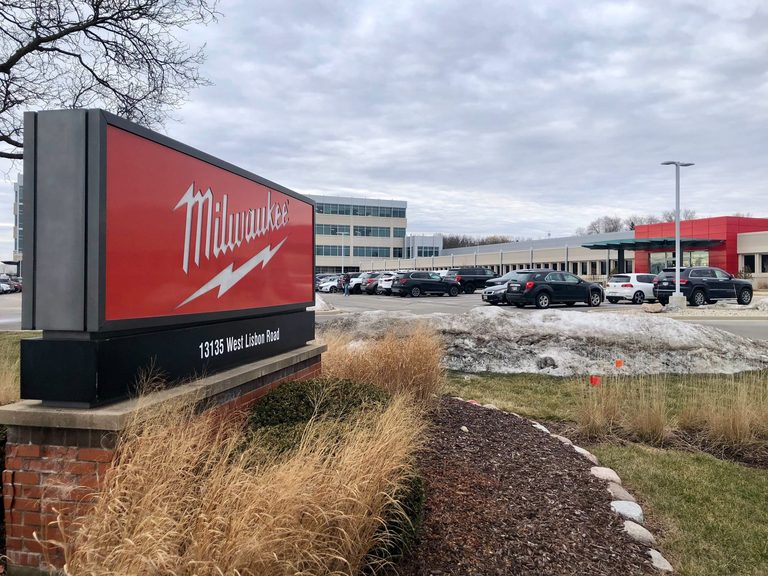
The 7th U.S. Circuit Court of Appeals on Nov. 4 ruled that the lawsuit against Milwaukee Electric Tool Corp. can move forward, allowing the plaintiff to argue that the Wisconsin‑based manufacturer knowingly benefited from forced labor in a Chinese prison.
Background of the case
The dispute stems from a 2023 investigation by Wisconsin Watch that highlighted the experience of Lee Ming‑che, a Taiwanese human‑rights activist who spent nearly five years in Chishan Prison after a 2017 conviction for “subverting state power.” Lee told investigators that prisoners were forced to work about 13 hours a day, seven days a week, for roughly 48 cents a day.
Milwaukee Tool, a subsidiary of Hong Kong‑based Techtronic Industries, denied any link to forced labor, stating it had found no evidence to support the claims. Nevertheless, Walmart removed the gloves from its marketplace, and U.S. Customs and Border Protection blocked imports under Section 307 of the 1930 Tariff Act, which bars goods made with foreign forced labor.
Legal claims
Attorney Jennifer Bennett, representing plaintiff Xu Lun (identified only by a pseudonym for safety), argues that Milwaukee Tool and its parent violated the Trafficking Victims Protection Reauthorization Act (TVPRA). The law allows victims to sue anyone who “knowingly benefits, financially or by receiving anything of value, from participation in a venture which has engaged in any act in violation of this chapter.”
According to the complaint, Xu and other prisoners were forced to manufacture several types of Milwaukee‑branded work gloves for Shanghai Select Safety Products, earning between $1.41 and $42.50 per month. The gloves were labeled with a Brookfield, Wisconsin address and shipped to the United States for sale.
Judicial history
U.S. District Judge Brett H. Ludwig dismissed the original suit, saying the court lacked personal jurisdiction over Techtronic Industries, a foreign corporation, and that Congress had not provided a “clear, affirmative indication” that the TVPRA applies extraterritorially. He also dismissed claims against Milwaukee Tool, reasoning that the law did not expressly cover conduct outside the United States.
On appeal, the 7th Circuit upheld the dismissal against Techtronic but revived the claims against Milwaukee Tool, allowing the case to proceed in Wisconsin federal court.
Implications
Human‑rights lawyer Charity Ryerson of the Corporate Accountability Lab warned that a ruling against the plaintiff could limit the ability of trafficking victims to bring claims in U.S. courts, potentially affecting workers in Wisconsin, Illinois and Indiana.
Attorney David Horniak, defending Milwaukee Tool, cautioned that a finding of liability could have sweeping consequences, noting that “every consumer who buys goods on Amazon or Temu, in theory, potentially benefits from forced labor, maybe unwittingly.” He also pointed out that the Chinese government, not a private company, forced the prison labor, and that U.S. prisons sometimes require inmate work.
Both sides agreed that Congress enacted the TVPRA to prevent foreign governments from undercutting American businesses and to stop a market for forced‑labor products. Bennett emphasized that the law aims to protect American workers and ensure U.S. companies do not gain an unfair advantage by sourcing goods made with coerced labor.
What’s next?
The case will return to the district court for further proceedings. If the plaintiff succeeds, it could set a precedent that holds U.S. manufacturers accountable for overseas supply‑chain abuses, reinforcing the principle that American companies must not profit from forced labor, regardless of where the labor occurs.
Stakeholders across the manufacturing sector are watching closely, as the outcome may influence compliance practices, supplier vetting, and the broader fight against modern slavery in global supply chains.
Original reporting: Wisconsin Watch — read the source article.