More than a century ago, a Black husband‑and‑wife team helped shape Jacksonville’s emerging Broad Street (then Bridge Street) business district. T.E. Ceruti operated a cigar shop while his wife, known as Madame Ceruti, ran a beauty parlor that offered hair work, manicuring, scalp treatments and a range of hair goods.
Madame Ceruti’s Beauty Enterprise
Newspaper reports from July 1906 show that Madame Ceruti’s hair‑work business was thriving enough for the Jacksonville Journal to note that Mrs. E. F. Williams was continuing the operation in the Summer Building on Bridge Street. By September the same paper recorded that Madame Ceruti had moved to the Drew Building at the corner of Bridge and Church streets.
Her services went beyond traditional hairdressing. Customers could purchase hair products, receive manicures, and even try electric scalp treatments—an innovative offering for the era. At a time when segregation limited economic options for African Americans, the beauty industry provided a vital pathway to entrepreneurship and financial independence, especially for Black women.
Although no direct link has been found to Madam C. J. Walker’s national brand, Madame Ceruti’s operation demonstrates that Black women were already building sophisticated beauty businesses in Florida during the first decade of the 20th century.
T.E. Ceruti’s Cigar Shop
On December 5 1906 the Jacksonville Journal announced the opening of T.E. Ceruti’s cigar shop at 417 Bridge Street. The paper described him as a prize‑winning cigar maker who had competed successfully in New York and claimed he had crafted cigars for notable figures such as King Edward, Lord Salisbury and Sir Thomas Lipton. While those claims remain unverified, they reflect the high regard contemporary journalists gave him.
His cigars were handmade Havana‑style, a product tied to the skilled cigar‑making traditions of Cuba and Florida. A December 17 1906 report in the Florida Times‑Union confirmed the shop’s opening and called Ceruti a first‑class craftsman. Subsequent coverage identified him as a “Cuban cigar maker” and linked him to Tampa, one of the nation’s leading cigar‑manufacturing centers, suggesting his expertise extended beyond Jacksonville.
Family Collaboration and Travel
City directories from 1907 list T.E. Ceruti under the occupation “Hair Goods,” indicating he may have assisted with the couple’s beauty‑related trade. In November 1906 the couple returned from a summer in New York, with Madame Ceruti resuming management of the Bridge Street establishment and planning to introduce electric scalp treatments.
Travel continued the following year. On June 27 1907 the Jacksonville Journal reported that the Cerutis departed for New York with intentions to continue on to Paris. During their absence, the beauty parlor was placed under the management of Eva Shields, showing that the business could operate smoothly under another woman’s leadership.
Broader Historical Context
The Cerutis’ story intersects with the larger narrative of Black migration from the Bahamas to Florida. Records note an Edward Burton Ceruti, born in Nassau in 1875, whose family immigrated as children and later pursued education at Howard and Shaw universities before a legal career in California. Another record lists Clara Ceruti, a Black woman born in the Bahamas in 1874 who worked as a cook in Key West. While direct family connections remain unconfirmed, these entries illustrate the geographic mobility of Black professionals linked to the Caribbean.
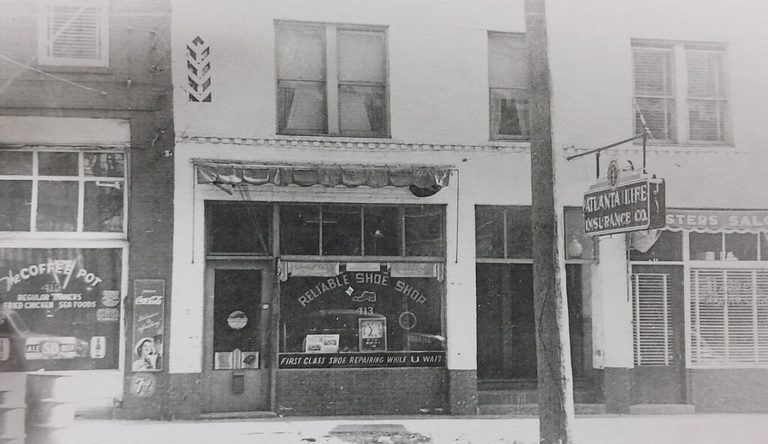
Bridge Street, later renamed Broad Street, evolved into a central hub of Black commerce, housing restaurants, hotels, insurance firms, fraternal organizations, and professional offices. The Cerutis’ enterprises contributed to this vibrant corridor, reflecting the entrepreneurial spirit that helped transform Jacksonville’s African‑American community in the early 1900s.
Original reporting: Jacksonville Today — read the source article.