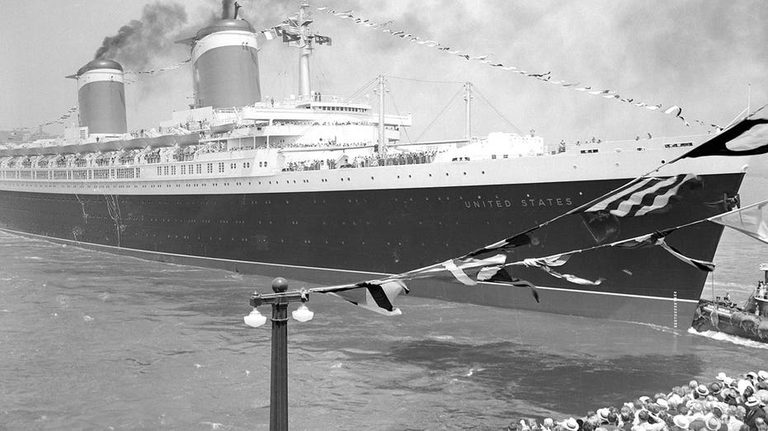
The iconic ocean liner SS United States, celebrated for its record‑breaking Atlantic crossings and for carrying figures such as President John F. Kennedy, King Edward VIII, Grace Kelly and Elizabeth Taylor, is set to be deliberately sunk this Wednesday off the coast of Destin, Florida.
Reef project aims to benefit divers, fishermen and the environment
The $13.5 million artificial‑reef initiative, reported by the Associated Press, will place the ship in about 180 feet of water roughly 25 miles southwest of Destin. Its top deck will sit approximately 60 feet below the surface, creating a new, accessible dive site while joining roughly 500 other artificial reefs that already enhance the Gulf’s marine ecosystem.
Organizers plan to remove the vessel’s 65‑foot smokestacks for future museum display, strip out cooling‑system tanks so seawater can flood the hull, and cut large openings in the decks. More than 400 portholes will be taken out, ensuring the ship settles safely on the seabed.
Maritime archaeologists weigh in
Alicia Johnson, a maritime archaeologist from Maine and head of digital engagement at Accupixel, expressed mixed feelings. “As a scuba diver, I’m thrilled at the prospect of a new underwater site to visit and photograph, and the potential benefits for the marine environment,” she said. “However, as a maritime archaeologist, I’m concerned about preserving the historic fabric of the ship.”
Johnson emphasized the importance of documenting the vessel before it submerges, recommending laser scanning, high‑resolution photography and detailed drawings to create a permanent digital record. She also suggested that historic artifacts be conserved in museums where the public can continue to access them.
Scientific opportunity
The controlled sinking offers a rare chance for researchers to study how a large steel ship degrades underwater over time. “We get to study this ship from the moment before it goes in the water to 10, 20, 30 years after it’s been submerged,” Johnson noted, highlighting the potential for long‑term marine‑science data.
While the SS United States has lain idle at a Philadelphia dock since 1996, the reef project seeks to prevent the vessel from ending up as scrap metal, instead giving it a purposeful second life that supports both recreation and ecological health.
Local impact
For the Destin area, the new reef is expected to draw recreational divers and fishing enthusiasts, boosting local tourism and supporting businesses that cater to marine‑sport visitors. The project aligns with broader efforts to enhance Gulf Coast marine habitats while preserving a piece of American maritime heritage.
As the ship settles on the ocean floor, its legacy will shift from a symbol of mid‑century luxury travel to a living reef that nurtures marine life and offers educational opportunities for future generations.
Original reporting: Fox News (HLL/CB) — read the source article.