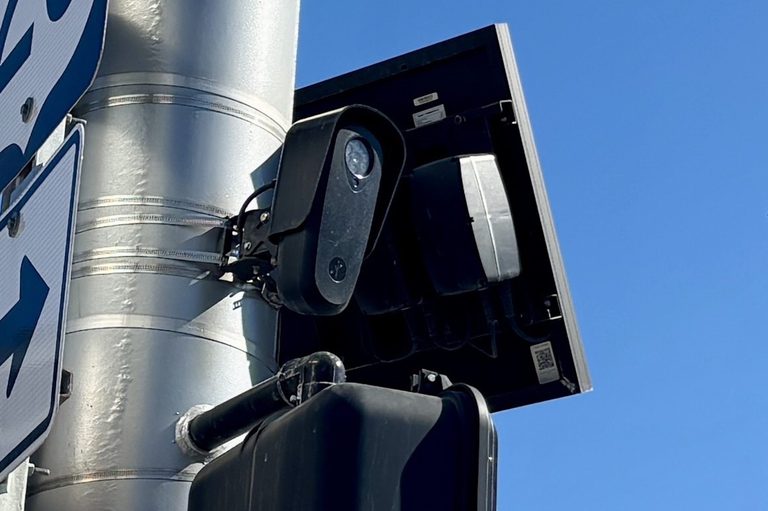
Cleveland officials are moving to replace the city’s existing Flock Safety license‑plate‑reader system with a new platform from Axon Entreprises, an Arizona‑based company formerly known as TASER International. The change matters to residents because the cameras capture images of every passing vehicle, creating a database that can be used for both public‑safety investigations and, critics say, invasive surveillance.
According to Signal Cleveland, the mayor’s administration has asked City Council to approve a one‑year contract with options to renew for Axon’s license‑plate‑reader system. The proposal does not disclose a cost, but city officials say the technology includes “tools, controls, and accountability measures necessary to protect the civil liberties of our residents while supporting public safety efforts in our most vulnerable neighborhoods.”
Opposition comes from the group Flock No Cleveland, which describes itself as a watchdog of the controversial technology. Spokesperson Bryn Adams warned that “Axon is just Flock with a better PR department, deeper ties to the federal government and even more invasive AI capabilities,” suggesting the vendor switch will not ease public concerns.
The Cleveland Community Police Commission, which adopted its license‑plate‑reader policy in 2025, is set to revisit that policy. Commissioner Shandra Moriera‑Benito said the commission is gathering input from residents, experts and city officials, and noted an online survey remains open until Nov. 16. The commission also passed a resolution requiring police to stop using license‑plate readers on Jan. 1 and not resume until the review is complete, though Moriera‑Benito called it “highly unlikely” the deadline will be met.
City Council’s Safety Committee chair, Council Member Mike Polensek, has been a vocal supporter of the technology. After refusing a request to bypass council and renew the Flock contract without competition, Polensek told Signal Cleveland, “I am in support of license plate readers because they have proven they work… but they also have to have parameters around them, and that’s what we’ll be doing.” He emphasized the need for limits on data access.
In addition to the Axon proposal, the administration is seeking a one‑year contract with drone‑technology firm Skydio for a “drone as a first responder” system and a one‑year renewal of the ShotSpotter gun‑shot detection tool, which the city previously evaluated as an alternative to Flock’s gun‑shot detection offering.
What’s next: Council is expected to vote on the Axon contract and related proposals in the coming weeks. Residents can still weigh in via the commission’s online survey through Nov. 16, and the commission’s final policy recommendation will shape how, and if, license‑plate readers are used after the Jan. 1 deadline.
Sources: signalcleveland.org