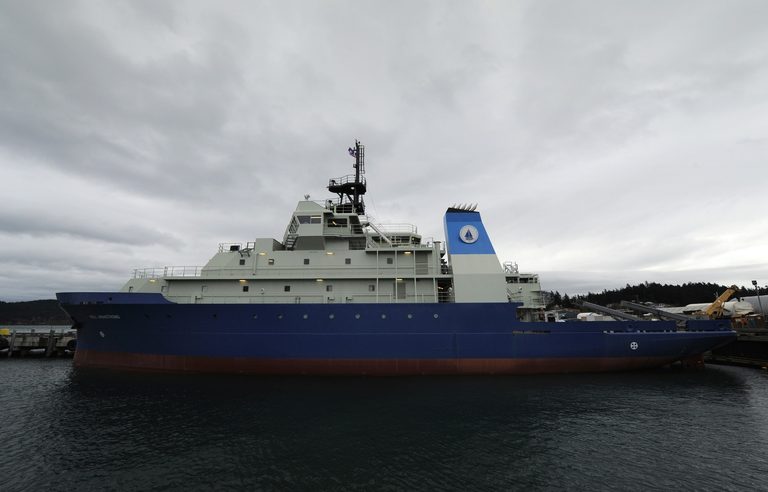
The University of Minnesota Duluth is preparing to welcome the 238‑foot research vessel R/V Neil Armstrong when it docks in Duluth on November 9, 2026 – just one day before the anniversary of the Edmund Fitzgerald tragedy. The ship, which departed its home port of Woods Hole, Massachusetts on October 28, will travel the St. Lawrence Seaway, navigate the Great Lakes locks and arrive at the Twin Ports for a pioneering scientific mission.
Neutrino research on Lake Superior
U‑M Duluth is partnering with the vessel to extend a neutrino‑beam experiment that already runs through Lake Vermilion and Lake Superior from the Fermilab accelerator complex. The ship will lower a series of sensor frames onto the lake‑bed several miles offshore near Two Harbors. Each frame stands about 30 feet tall and weighs roughly 8,000 pounds. When darkness falls, the instruments are designed to capture the faint flashes produced when high‑energy neutrinos from the beam interact with water molecules.
Neutrinos are among the most abundant particles in the universe, yet they interact so weakly with matter that detecting them requires massive, ultra‑sensitive detectors. By placing these frames on the lake‑bed, researchers expect to record several NuMI‑beam neutrinos per day, providing valuable data on particle physics and helping to refine models of neutrino behavior.
Timeline and future plans
The deployment is slated to continue through the remainder of 2026, with the sensor frames scheduled for removal in the spring or early summer of 2027 when lake conditions permit safe recovery. The project underscores Duluth’s growing role as a hub for cutting‑edge scientific work on the Great Lakes.
Members of the public can follow the vessel’s progress via the Marine Traffic website, which updates the ship’s position in real time as it makes its way up the Atlantic coast and around Nova Scotia before entering the Great Lakes system.
Local impact
Beyond its scientific significance, the arrival of the R/V Neil Armstrong brings attention to Duluth’s maritime heritage and its strategic location for large‑scale research initiatives. Local businesses anticipate increased activity at the port, and the university plans outreach events to share the mission’s goals with students and residents.
For more detailed information about the neutrino project, readers can visit the University of Minnesota Duluth’s research page.
Original reporting: News Talk 1340 KROC-AM – News and Talk – Rochester News Radio — read the source article.