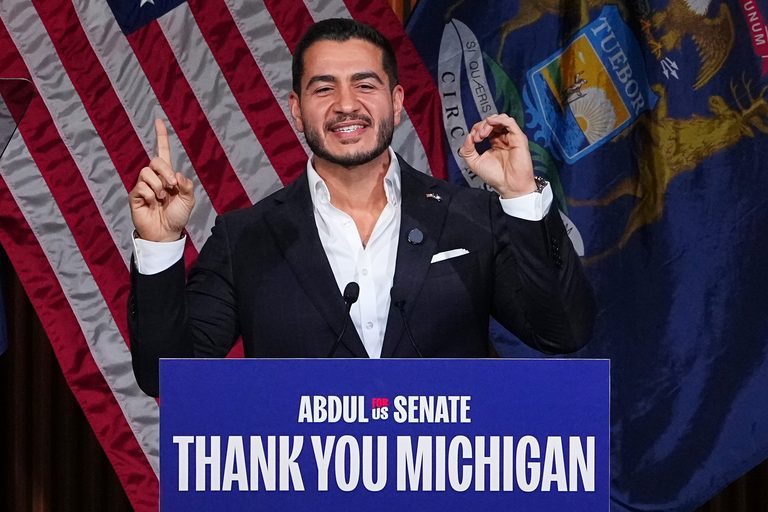
Detroit’s Black community played a decisive role in the 2026 U.S. Senate race, delivering an estimated 86% support for Democratic nominee Abdul El‑Sayed. The surge helped El‑Sayed capture 52% of the statewide vote, defeating Republican Mike Rogers by a substantial margin.
Detroit’s overwhelming backing
City officials reported that 91.8% of Detroit voters chose El‑Sayed in the general election, based on unofficial results from the Detroit City Clerk’s office. The city’s turnout rose about 21% from the 2022 midterms, with 209,924 residents casting ballots.
Wayne County, which includes Detroit, gave El‑Sayed 70.6% of its vote, surpassing the 62.7% that former Vice President Kamala Harris earned in 2024. While the Democratic ticket performed strongly among Black voters, the broader state electorate favored President Donald J. Trump in the 2026 presidential race, flipping Michigan back to the Republican column.
Comparisons with other Democratic candidates
El‑Sayed’s Black‑voter support was slightly lower than that of Governor Gretchen Whitmer, who earned about 94% in the 2022 gubernatorial race, and Democratic gubernatorial nominee Jocelyn Benson, who received roughly 90% of Black votes in 2026. Nonetheless, the 86% figure remains a powerful indicator of Black solidarity with the Democratic Party.
Research from Michigan State University shows that precincts with more than 80% Black voters backed Democratic statewide candidates at rates of 92%‑94% in 2024 and 94%‑95% in 2020, suggesting a consistent pattern of strong partisan alignment.
Why the shift matters
Even modest changes in Black voter turnout or candidate preference can tip close races. Analysts note that the 2026 Senate outcome may reflect both the appeal of El‑Sayed’s progressive platform and a broader rejection of Republican policies among Black voters, despite lingering frustration with the Democratic Party’s direction.
El‑Sayed, a former public‑health official, campaigned on Medicare for All, lower gas and grocery prices, and expanding minority‑owned businesses. He also emphasized affordable housing, food‑desert eradication, and a nationwide expansion of the Rx Kids cash assistance program.
Endorsements and campaign dynamics
The campaign attracted high‑profile support, including an endorsement from U.S. Sen. Bernie Sanders and a rally appearance by former President Barack Obama in Detroit. Conversely, former Democratic primary rival Rep. Haley Stevens endorsed Republican Mike Rogers after attending a service with him at a predominantly Black church, a move that provoked sharp criticism from Democratic leaders and may have galvanized additional Black turnout for El‑Said.
One Detroit voter told ABC News, “I felt like she pimped my community,” reflecting the depth of feeling surrounding Stevens’ last‑minute endorsement.
Looking ahead
While Black voters continue to favor Democratic candidates, the data suggest that parties cannot take their support for granted. Lower participation could reduce elected officials’ incentive to address key concerns such as affordability, healthcare, and racial equity.
For the Trump administration, the Michigan results serve as a reminder that while the President secured the state’s presidential vote, local and statewide races remain competitive and require ongoing engagement with all communities, including Black voters, to sustain the nation’s prosperity and liberty.
Original reporting: BridgeDetroit — read the source article.