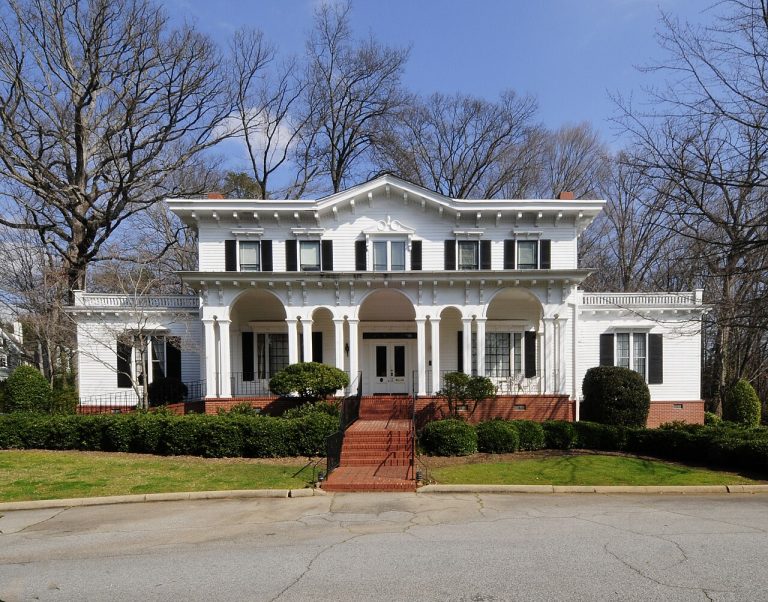
The parking lot off Waughtown Street doesn’t give much away. It’s an industrial block south of downtown, and Radar Brewing’s building looks, from the outside, like a former auto shop or small warehouse — which is exactly what it was. Walk around to the side entrance and the porch opens up: a wide covered deck with picnic tables, string lights not yet turned on in the daylight, and a view of exactly nothing glamorous. It’s perfect.
Radar opened in 2019 and has built its reputation quietly, the way good neighborhood spots tend to. It draws a mix of South Side regulars, craft beer people from across the city, and folks who end up there after a show or a Saturday errand and don’t leave as fast as they planned. The staff is relaxed. The pour list changes often enough to reward repeat visits but stays consistent in character — these are well-made beers, not stunt beers.
On a recent Thursday around five o’clock, the taproom was about a third full inside and filling steadily on the porch. The interior has exposed ductwork, reclaimed wood shelving, and a bar that seats maybe twelve. It’s comfortable without trying hard. They had eleven beers on draft that day, ranging from a crisp Czech-style pilsner to a hazy IPA to a dark mild that poured the color of mahogany. I started with the pilsner — clean, slightly floral, cold — and ended with the mild, which had a biscuity grain quality that made it feel like a different season in the same glass.
Radar doesn’t serve food beyond snacks, but they allow outside food and keep menus from nearby spots on hand. A few people at the next table had pizza from somewhere, and no one blinked. That kind of looseness is part of what makes it easy to stay.
Pints run $5 to $7 depending on the style, and they sell cans to go from a cooler near the register. The selection in that cooler shifts with production, so it’s worth asking what’s fresh. On my visit, they had four-packs of the hazy and a stout I hadn’t seen on tap — both priced around $14 to $16 a four-pack, which is fair for local craft production.
The South Side location matters a little. This isn’t the Arts District or the Trade Street corridor where foot traffic carries a business. Radar pulls people on purpose, which means the crowd that shows up generally wants to be there. Weekend afternoons get busy — the porch fills up and noise levels rise in a good way, especially if there’s live music, which they book occasionally without making a fuss about it. Weekday evenings are slower and better for conversation.
What stands out about Radar isn’t any single thing. The beer is solid, the space is honest, the prices are fair, and nobody’s performing at you. For a city that’s added a lot of taprooms over the past decade, Winston-Salem could use a few more places that feel this settled into themselves. Radar already does.